The topic I replaced my tower with a mini PC and immediately stopped getting tension headaches… is currently the subject of lively discussion — readers and analysts are keeping a close eye on developments.
This is taking place in a dynamic environment: companies’ decisions and competitors’ reactions can quickly change the picture.
As we deal with countless relentless summer heat waves, the reality of working through them can be grueling and claustrophobic, especially when your indoor workspace has limited airflow and feels like a literal sauna. I realized almost immediately that my home office is significantly warmer than any other room in my home, and this is because my PC is chugging away at full tilt, dumping massive sheets of extremely hot exhaust directly all over my legs. The consequence is physical dehydration, low-grade tension headaches, and an intolerable working environment.
A PC is not just a collection of benchmark scores. It’s an active physical presence in your room. When the heat gets insufferable, the efficiency of a highly optimized low-power mini PC starts to outshine the raw brute-force performance of a massive ATX tower. Transitioning to an ultra-compact device offers other benefits beyond just space-saving. It’s also a calculated move for thermal comfort and workspace sanity.
When I started rethinking my desktop setup, I ran into a central conflict. For years, many other PC enthusiasts and I have treated the full-tower desktop as the unassailable default for computing. However, when your workstation’s performance comes at the cost of your personal physical comfort, it made me realize that it might be time for me to shift my priorities.
There is a direct relationship between computing power and room temperature. This is because of the law of thermal equivalency. The physical reality is that nearly every watt of electricity drawn from the wall socket by your power supply is eventually converted into thermal energy and, as a result, dissipated into your room.
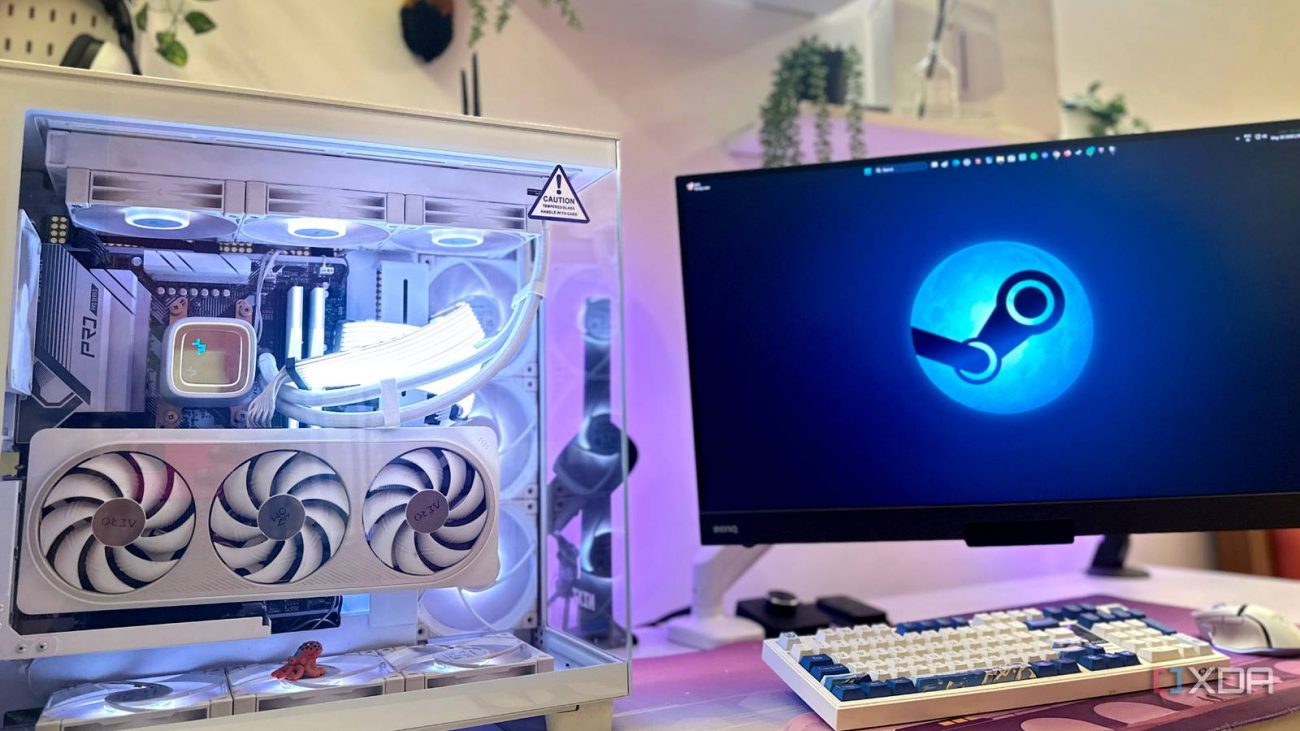
A high-end workstation paired with a discrete GPU, under average daily editing or compiling loads, draws roughly 500W of sustained current. This doesn’t even account for those with powerful GPUs that are constantly at full load. But for context, a small personal space heater can run at 500W on its low setting. My full-size tower is literally running at the same wattage as a heater. It’s no wonder I’m starting to feel so uncomfortable while working to the point where I’m getting tension headaches and feeling dehydrated.
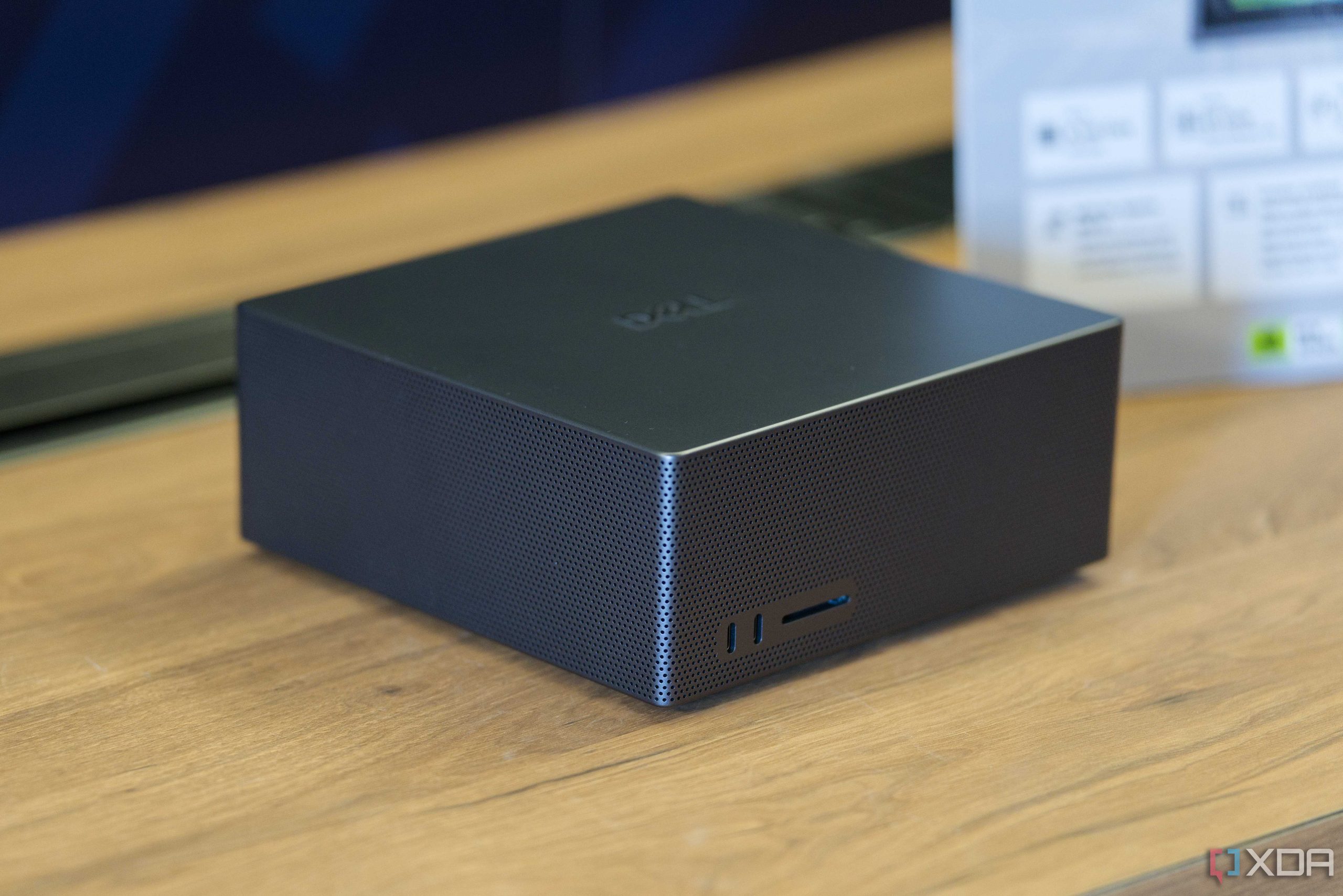
This is in stark contrast to the silicon inside a modern high-end mini PC, which utilizes highly optimized mobile processor architectures like AMD Ryzen’s HS series or Intel’s Core Ultra platforms. These compact systems cap their total thermal design power (TDP) at 35–65W. You’re essentially replacing a space heater with a light bulb.
There are multiple pros to scaling down your setup. The most obvious win is the immediate drop in room temperature. By reducing your PC’s heat output by over 80%, your immediate desk space stops acting as a localized heat trap, preventing headaches and cognitive fatigue, at least, in my case.
You also get aggressive energy efficiency, too. Shifting from a heavy-duty 750W+ internal power supply to a 90W or 120W external power brick significantly reduces your daily household power draw. For those who work from home every day and use their PCs all the time, this will noticeably cut your energy bills over a long-term period.
You also benefit from saving space. You can reclaim a massive portion of your physical desk footprint by shrinking your computing core down to a box the size of a paper map book. You clean up cable clutter, and you create an open and visually calm workspace that is easier to keep clean and dust-free.
It’s worth noting that while there are a range of benefits, there are also some cons too. You, of course, lose the ability to upgrade in a modular way. You won’t be able to swap your CPU, upgrade your internal power supply, or easily replace a failing motherboard. When a mini PC’s core silicon eventually falls behind the performance curve, you might be looking at a full system replacement.
If you are a heavy media creator and gamer, you might face performance limitations. Integrated graphics are incredibly capable for daily tasks, but they cannot compete with the raw power of a dedicated PCIe GPU. Opting for an external GPU dock to bridge this gap can add significant cost and cable clutter, and introduce minor bandwidth bottlenecks, but it is a solution to the problem.
Funnily enough, another issue you might face is that a mini PC can actually produce a higher-pitched, more noticeable fan whine right on your desk. A large ATX case uses massive 140mm fans that can move high volumes of air quite quietly at low RPMs. A mini PC, packed into tight physical quarters, must rely on high-density blower fans. This means that, pushed to its limits, it can be loud.
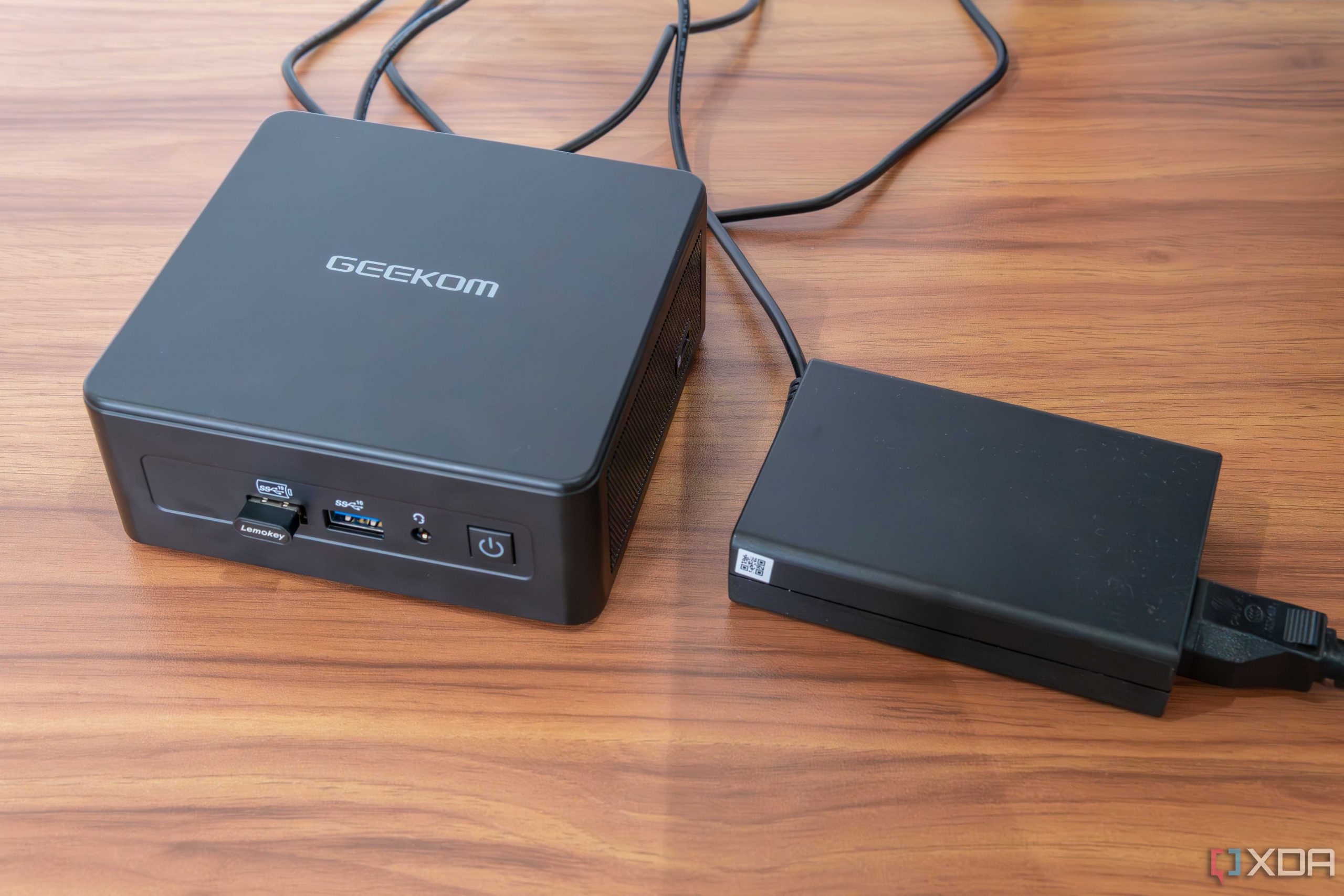
The Geekom Air12 Lite is a sleek, highly compact mini PC powered by Intel’s efficient 13th Gen Alder Lake N150 quad-core processor (up to 3.6 GHz), paired with Intel UHD graphics. It’s ideal for everyday tasks, 4K media playback, and lightweight gaming or emulation. Power usage is remarkably low, at ~6W at idle, peaking at around 25W. It is highly energy-efficient and virtually silent during typical workloads.
However, one thing to note is that just because you invest in a mini PC to use during heat waves or when you don’t need a full-size ATX tower for your tasks, it doesn’t mean you have to get rid of your whole PC. It can still be there, ready to switch on as soon as the heat wave is over or when you want a game instead of working. Mini PCs are so small that they can easily fit on your desk without needing to get rid of your full-size tower.
For years, I treated raw frame rates and CPU render times as the only metrics that matter, but a PC that makes your workspace physically miserable for months out of the year is fundamentally flawed, no matter how fast it is and what the benchmarks are. Scaling down my hardware wouldn’t be a retreat. It’d be a smart, calculated pivot towards comfortable computing. For those who spend their entire day at their desks, trading a fraction of unneeded peak rendering power for a cool, quiet, and comfortable workspace is one of the smartest system upgrades.