The topic Your router’s “smart” connections are quietly making your Wi-Fi… is currently the subject of lively discussion — readers and analysts are keeping a close eye on developments.
This is taking place in a dynamic environment: companies’ decisions and competitors’ reactions can quickly change the picture.
When you need the internet to work, setting up a router becomes something you want to do as quickly as possible, and you don’t want to dwell on the various settings available. However, ignoring some of those options can make your internet experience worse than you’d like it to be.
Something I’ve always been wary of with my routers is the bands on which the network operates, and which ones my devices use. If your router is only broadcasting one network name, you might inadvertently be connected to a much slower internet. Thankfully, this is extremely easy to fix, and I highly recommend it.
Wi-Fi has evolved a lot over the years. It used to operate almost exclusively on the 2.4GHz band, which is quite common for all kinds of wireless communication, including Bluetooth or custom wireless adapters for your keyboard or mouse. But as internet speeds got faster and this band got more congested, a higher frequency was required to deliver those speeds, so eventually, the 5GHz band started being used for higher bandwidth. Technically, the Wi-Fi specification accounted for the 5GHz band as far back as 1999 (with version 802.11a), but it didn’t start seeing widespread adoption until the 2010s with Wi-Fi 4 (802.11n), and especially with Wi-Fi 5 (802.11ac), which focused exclusively on the 5GHz band. Even more recently, the 6GHz band was also added for even higher speeds.
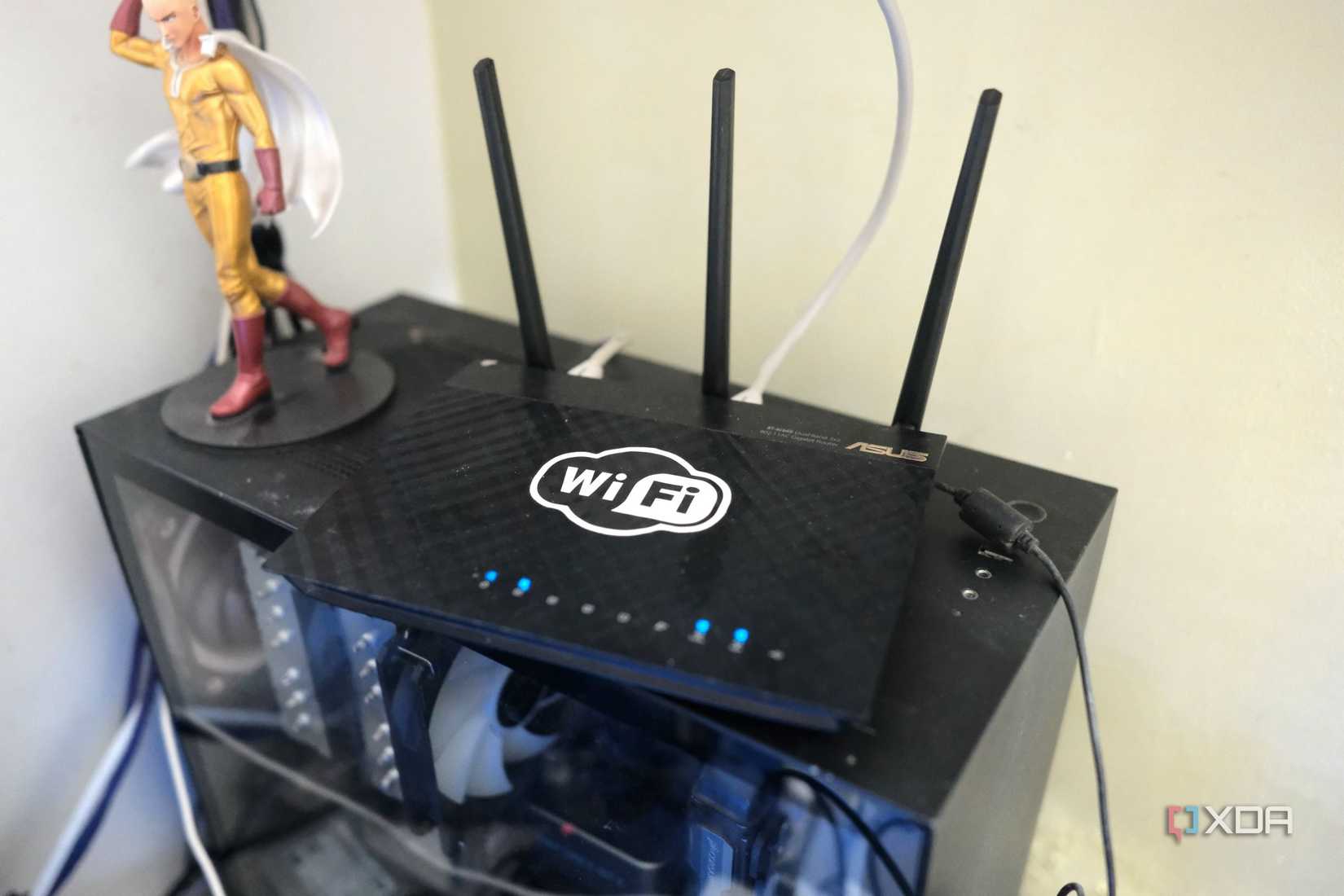
Modern routers and access points need to broadcast signals on all of these bands, because while the 5GHz band can offer much higher speeds, it does so at the expense of effective range, since the higher-frequency signal can be blocked more easily by objects in the way. What many routers tend to do is broadcast all of these signals under the same SSID — the network’s visible name — and let the target device connect to whatever provides the best experience.
In theory, this should be great and result in the fastest internet possible, but you don’t have any control over what band your device is going to connect to, and as a result, your router may end up pushing a device onto the 2.4GHz network, even when it could clearly benefit from the higher speeds of the 5GHz band. Likewise, some devices, particularly smart home devices like light bulbs, may only support the 2.4GHz band, and struggle to connect if both bands are active on the same SSID.
Thankfully, fixing this is very easy. Most routers that broadcast on multiple bands also have clear options allowing you to create different networks for the different bands supported. Depending on the model, you may either have an option that specifically says something along the lines of “use different settings for the 2.4GHz and 5GHz bands”, or your router may already give you direct control over the settings for each band’s network, and you can simply choose whether to give them the same name or different ones.
Wider channels promise higher bandwidth, but also introduce more interference
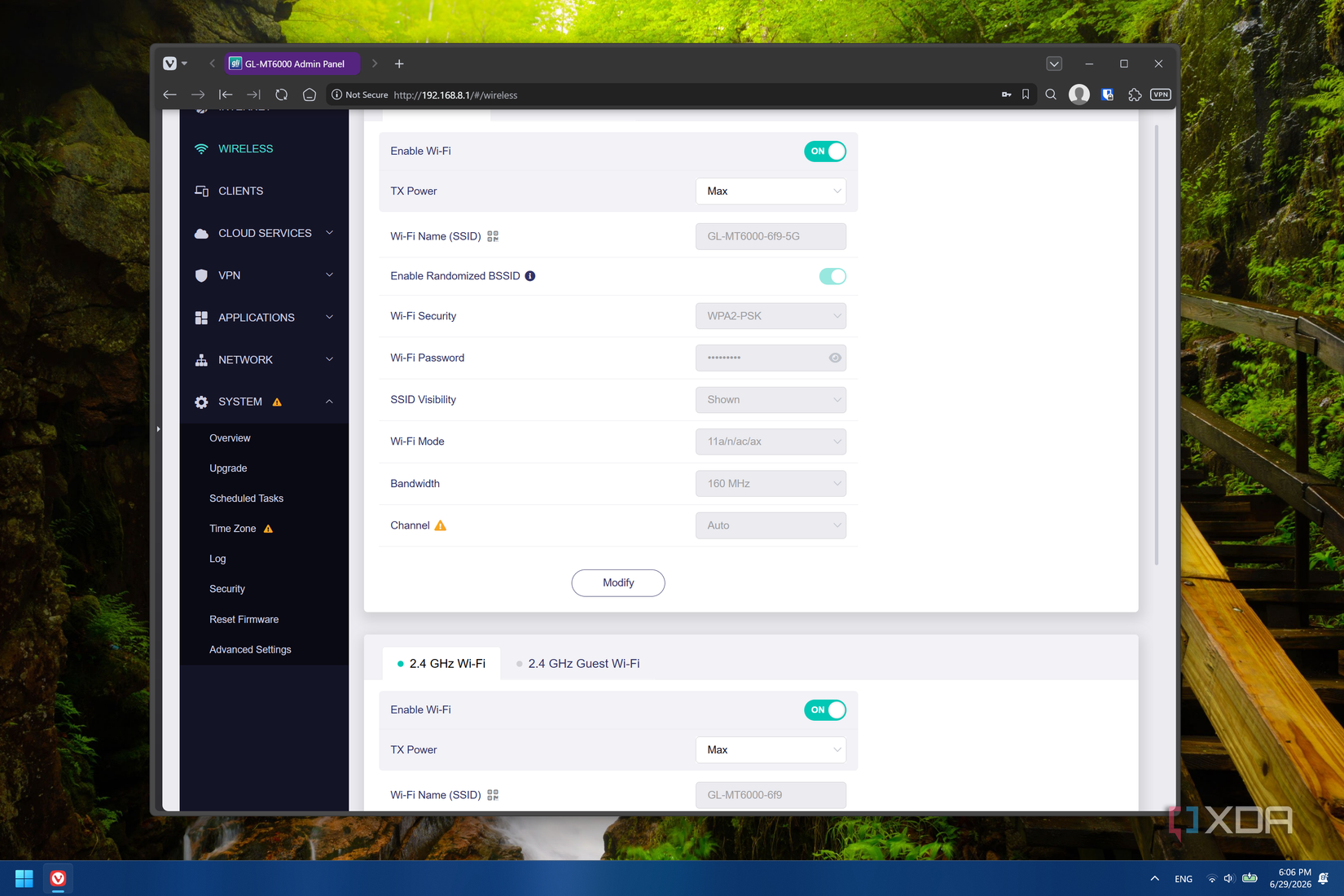
Each router has a different management page address, but some typical addresses are 192.168.1.1 or 192.168.0.1. If you’re not sure how to get there, your best bet is to look at your router’s manual or search online for to find out how to get to it. You’ll usually find these options under the Wi-Fi or Wireless section of the settings page.
On my GL.iNet router, the 2.4GHz and 5GHz networks both have their settings immediately visible, so all I have to do is give the 5GHz band a slightly different name. A typical approach is just to add 5G at the end of the original name of the network, but you can be creative with it.
By having separate network names, you can make it so that your devices only connect to the network they know, and that avoids a whole host of problems. for example, if you have a computer in the house that’s always in range of the 5GHz network, there’s no reason for it to have access to the 2.4GHz network at all; you always want to be on the fastest band. A phone might have a use for both, since you might end up moving outside the range of the 5GHz network but still be able to connect at 2.4GHz. Meanwhile, a light bulb or other IoT device has no reason to clog up the faster band when it’s just receiving basic commands, so keeping it at 2.4GHz indefinitely can improve the experience for your other devices.
I’ve always been of the belief that splitting SSIDs is for the better, and to this day, that has held up fairly well. I’m well aware that routers and devices are relatively smart, and they will usually connect to the fastest network, not just the one with the strongest signal. But that isn’t always the case, as devices may incorrectly determine the link speed of each band, or the 5GHz may be temporarily unavailable or something. And you never know at a glance if your device is using the right connection.
In my case, it’s also helped me spot issues with my network. Occasionally (but rarely), my router’s 5GHz band goes down for a few minutes, and with a unified SSID, I never would have known anything was happening. It was only when one of my devices lost connection entirely that I realized a reboot may be in order and was able to fix it.
But as I mentioned above, devices are smart and tend to connect to the fastest network. It’s certainly possible that a unified SSID is hurting your internet speeds, but there could be other factors at play, too. Still, even if that’s the case, having split SSIDs at least helps you rule out one of the potential problems with your network. I stand by my recommendation.