The topic If you have a Mac, you should try this free and beautifully-designed disk space tool is currently the subject of lively discussion — readers and analysts are keeping a close eye on developments.
This is taking place in a dynamic environment: companies’ decisions and competitors’ reactions can quickly change the picture.
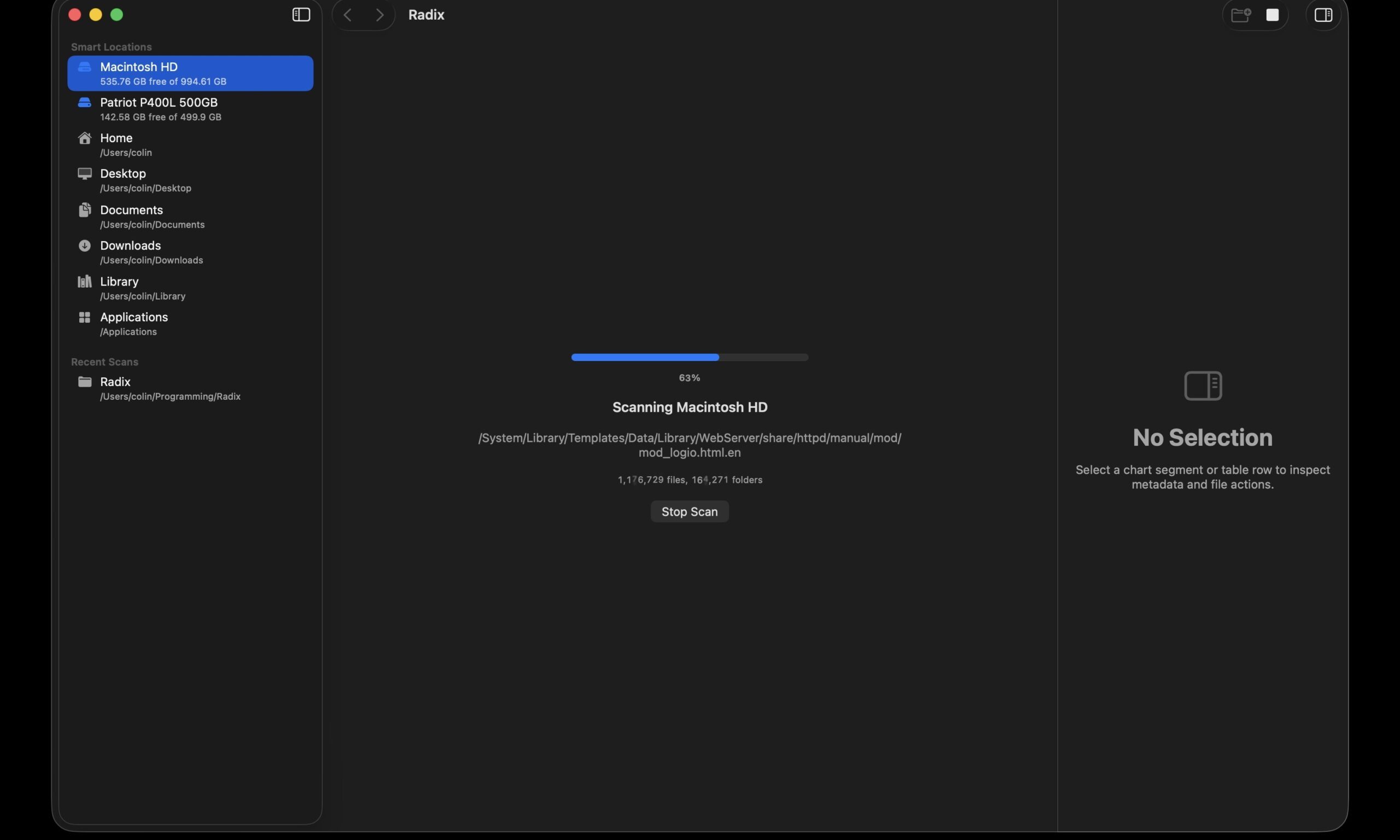
Running out of storage on a Mac is common, but Apple’s built-in storage tools are not always great at showing what is actually taking up space. You usually get broad categories, but finding the exact folders, downloads, app files, or old projects causing the problem can still take some work.
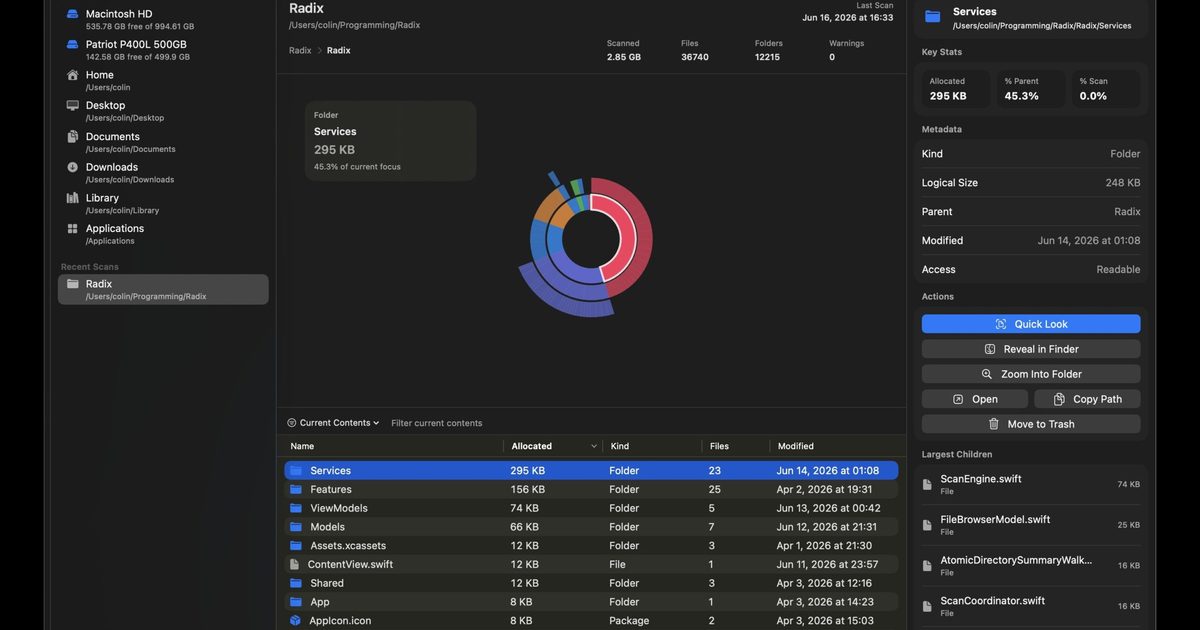
Radix is a free, open-source Mac app that tries to make that process clearer. It is a disk space analyzer that scans a folder, drive, or volume and displays the results in an interactive sunburst chart. Rather than digging through folders manually, you get a visual overview of how storage is being used across your drive.
Radix uses a circular chart where each ring represents another layer of folders. Larger sections take up more space, so it is easier to spot the files or directories that are using the most storage. You can click into sections to drill down, hover for more details, and sort or filter files by size, name, date, or type.
The app is built with Swift and SwiftUI, and its developer, Colin Kim, says it uses native macOS APIs to keep scanning fast. In a Reddit post, Kim said Radix uses under 100MB of RAM on launch and is designed to handle large scans efficiently.
Radix is entering a category with several existing options. DaisyDisk is probably the best-known polished version, but it costs $9.99. GrandPerspective and Disk Inventory X are older free alternatives, while SquirrelDisk is open-source but has not been maintained since early 2023, according to the data Kim.
Radix’s main draw is that it is free, open-source, and more modern-looking than many older disk analyzers. It also supports Quick Look, file metadata inspection, and search across either the current folder or the full scan tree. Everything runs locally, with no account, telemetry, or data collection. Radix supports macOS 14.0 or later.