
The topic Microsoft’s controversial Teams Wi-Fi tracking is back after multiple delays… is currently the subject of lively discussion — readers and analysts are keeping a close eye on developments.
This is taking place in a dynamic environment: companies’ decisions and competitors’ reactions can quickly change the picture.
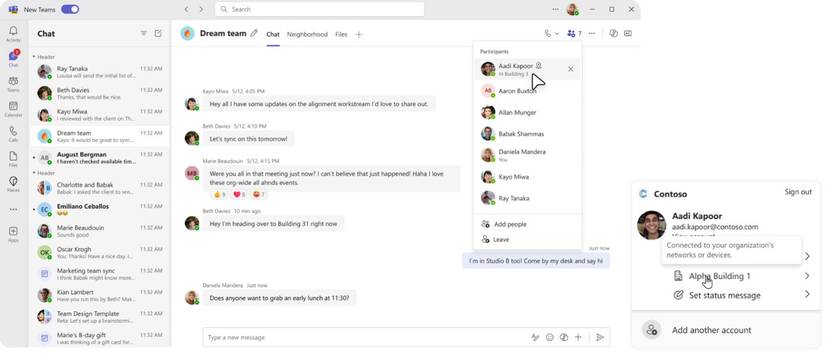
A little while ago, we caught wind that Microsoft was adding a new Wi-Fi tracking feature to Teams. The idea behind it is that, if an employee connects to a company’s Wi-Fi, Teams would automatically update their status to show their location. People were not pleased with the potential privacy issues that came with this feature, so Microsoft went back to the drawing board. Now it’s ready to give it another try, and this time it seems to give the user more control over the information they broadcast.
Over on the Tech Community blog, Microsoft explains what the updated Teams workplace check-in feature will do. At its core, it still works the same way: whenever an employee connects their device to a company Wi-Fi network, Teams reflects that in the user’s status. Microsoft says this allows managers to see who’s in what building, making it easier to schedule meetings, meet up with employees, or go for lunch.
With Microsoft’s first iteration of this feature, users complained that the new feature would allow managers to spy on their employees. In theory, they could use the feature to spot who arrives late to the office or see who’s working remotely. However, this new version of Teams’ feature seems to put more power into the user’s hands:
Microsoft says that enterprises will have the option to enable the feature and choose whether it’s opt-in or opt-out. However, Microsoft then explains that individuals can disable it on their device, and it won’t automatically activate regardless of which options the organization picked. One could argue that someone hiding their location would be guilty by omission in the eyes of their managers, but it’s at least giving users some control over the information they reveal.