The topic If a decade-old Nintendo Switch can run PC games, your next handheld doesn’t… is currently the subject of lively discussion — readers and analysts are keeping a close eye on developments.
This is taking place in a dynamic environment: companies’ decisions and competitors’ reactions can quickly change the picture.
For years, Arm gaming handhelds have come with an asterisk attached. They’re brilliant at Android games and emulation, but if you want to play your actual PC library, the answer has typically been an x86 machine. In other words, something like a Steam Deck, a ROG Ally, or any machine with an AMD or Intel chip inside. Arm was for the phone-shaped stuff, and x86 was for “real” PC gaming, and that split has felt permanent for a long time.
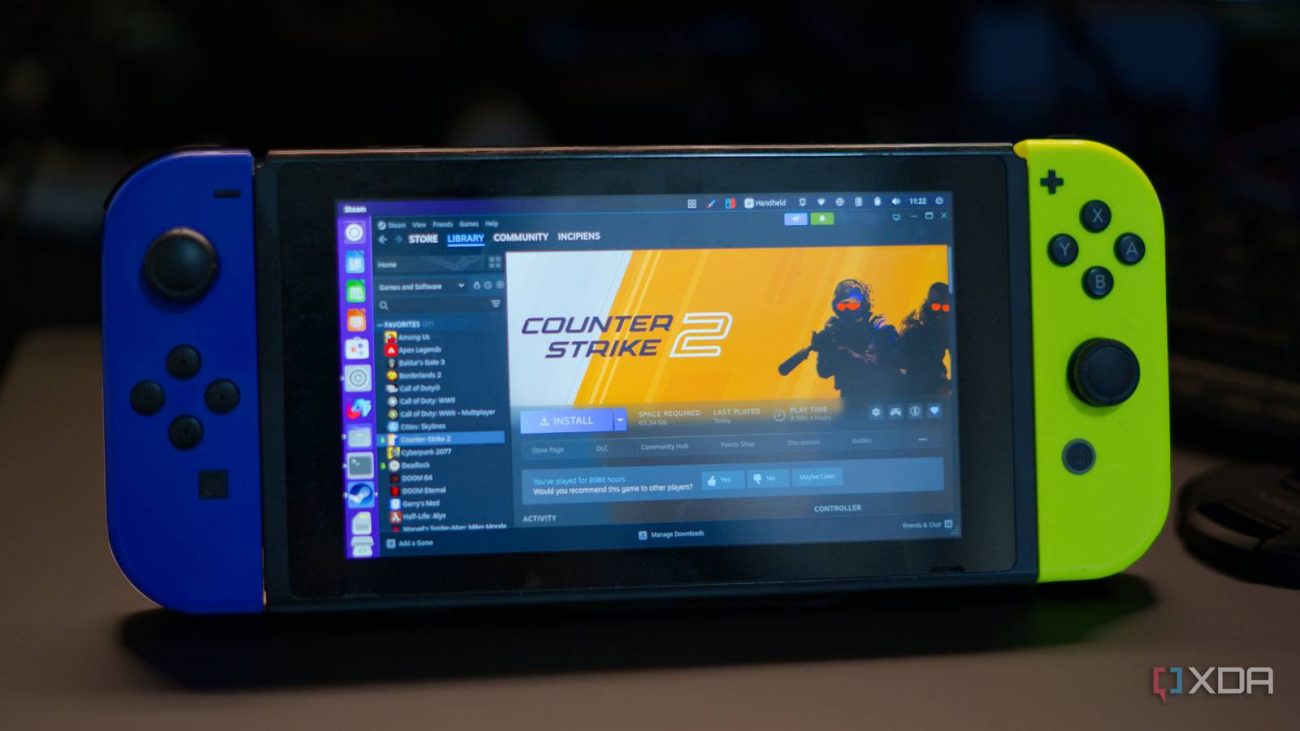
However, someone got Steam running on the original Nintendo Switch from 2017, using the Nvidia Tegra chip it shipped with practically a decade ago. Proton 11’s beta added Arm support, a modder dropped it onto a Switch and booted into Linux, and the Steam client loads up. It sounds like a party trick, and in fairness, on the Switch it mostly is. But it made something very clear: if this works on a Switch, an x86 handheld likely isn’t the end-game of PC gaming handhelds.
I want to be clear about what “works” means here, because it’s… relative. The clip that did the rounds and tipped me off to the growth in this world was just showing the Steam UI, not actual games running. Actually playing something takes a pile of workarounds, and even then you’re looking at low frame rates and a rather long list of caveats.
To be clear, the Switch is not a good device for this, but my point isn’t that the Switch was ever good at it. No, the point is that it works at all, on hardware this old, which has a lot of implications about the barriers being nowhere near as tall as they may seem from the outside.
Proton 11’s beta added Arm64 support and bundled FEX, the translator that turns x86 instructions into something an Arm chip understands. On a modern Arm Linux machine, that’s most of what you need. On the Switch it isn’t, because the console’s L4T kernel is ancient, and it’s far too old to run FEX at all, but there’s an alternative.
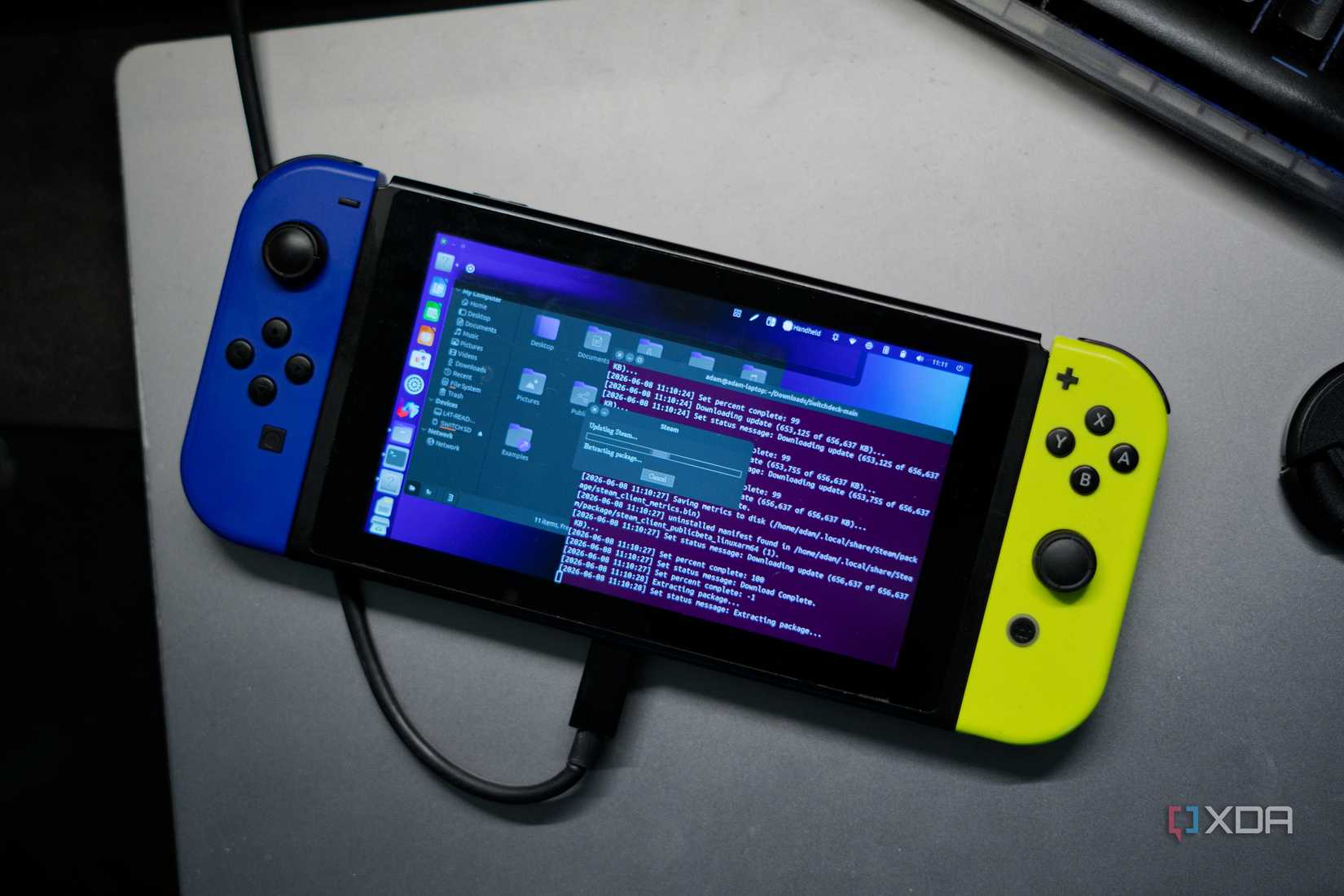
That alternative involves dropping FEX for Box64, the older community translator, and leaning on a project called Switchdeck that automates the messy parts. It downgrades the Steam client to a build from before mid-April, since newer ones crash with illegal instruction errors on the hardware, and it patches DXVK-Sarek and VKD3D into Proton because the Tegra X1 only goes up to Vulkan 1.2.
The result is that you have a working Steam client that can launch some games, but it’s rough. The memory is tight, and you’re picking a different Proton version per game, with 32-bit titles needing their own patches on top. Nobody involved is pretending this is plug and play, and you shouldn’t expect it to be.
Yet, despite all of that, the end result is that you have x86 games run on a 2017 Arm chip. Most of the Switch-specific pain comes from working around the old kernel, limited memory, and Tegra-era Vulkan support, rather than proving x86-to-Arm translation from scratch.
The reason any of this is possible comes down to how little the translation actually asks of the hardware. Box86 and Box64, both built largely by one developer, don’t emulate a whole x86 computer the way something like QEMU does. They translate the game’s own code, then redirect its calls to system libraries straight to the native Arm versions already sitting on the device, the likes of libc, SDL, and OpenGL. The chip never has to pretend to be an entire x86 PC.
Compatibility layers are why this works at all. On the Steam Deck, Proton translates Windows APIs and graphics calls into something Linux can run. On Arm, projects like FEX or Box64 add another layer by translating x86 CPU code into Arm code as well. That extra layer costs performance, but it’s why x86 instructions can still run on something as small as a Raspberry Pi. There’s a dynamic recompiler sitting on top that’s five to ten times faster than interpreting instructions one at a time, so you get speed without the weight of full emulation. On raw CPU work, Box64 used to outpace FEX, which is the translator Valve has spent years funding. A couple of years ago, the Box86 developer’s own benchmarks put Box64 at roughly two to three times FEX’s score on tasks like 7-zip. Nowadays the gap is a whole lot closer.
The Nintendo Switch has no business running PC games, and it doesn’t need to understand a single x86 instruction itself to still be able to. A thin translation layer handles the CPU code, while DXVK/VKD3D and the native graphics stack do the graphics work. The hardware being weak and old doesn’t really have any bearing on whether it works or not, just on whether it’s actually playable or not.
What this means, though, is that it isn’t a breakthrough waiting to happen, and in fact, x86-on-Arm is no longer the fundamental blocker it once looked like thanks to the efforts of community projects like Box64, Apple’s Rosetta 2, Microsoft’s Prism, Valve’s FEX, and so much more. The translation has been maturing for a long time, but what’s missing is hardware built to take proper advantage of it.
We already know modern Arm chips can do this, because people are doing it on phones right now. Snapdragon phones and handhelds run Cyberpunk 2077, The Witcher 3, and plenty of other PC games through apps like Winlator and GameHub, which are the same Box64-and-Wine idea wrapped in something more approachable. A two-year-old phone chip, not even a dedicated gaming part, can run a PC game well enough to actually enjoy it.
I’ve gone a long way down this road myself, and it threw up something odd. When I tried to get Portal 2 running, my newest and fastest phone, an Oppo Find N5 with a Snapdragon 8 Elite, was the one that failed, while the older Samsung Galaxy Z Fold 5 and its Snapdragon 8 Gen 2 was the one that worked. The reason wasn’t the chip’s power or the translation layer. It was the GPU driver. Running PC games on Android leans on Mesa Turnip, an open-source, reverse-engineered driver for Qualcomm’s Adreno graphics, and on a brand-new flagship GPU like the 8 Elite’s Adreno 830, that support simply isn’t as mature yet. Older chips, like the Snapdragon 8 Gen 2, have had years of Turnip work behind them, so it just gets on with it.
This is what people miss when they write Arm handhelds off. The driver mess has nothing to do with Arm itself. It comes from trying to run games on a phone that was never built to do it, using a community-maintained driver, on locked-down silicon that nobody optimized for gameplay. You’re fighting the platform the whole way.
A handheld built and sold to play games doesn’t inherit any of that. It ships with a GPU driver written and validated for its exact chip, integrated into the system, and tuned with gameplay in mind. The driver just works, the way it does on a console, and it means that you’re not trawling through a Discord server for a beta Turnip build, because the manufacturer already did that work and shipped the result.
Qualcomm is already nudging hardware in this direction. Its Snapdragon G3 Gen 3 is a chip made specifically for gaming handhelds, and it’s already showing up in devices from companies such as Ayaneo and OneXPlayer. Ayaneo says its Pocket S2 supports Turnip out of the box, which is the more important shift here: vendors are starting to treat PC-game compatibility as part of the product.
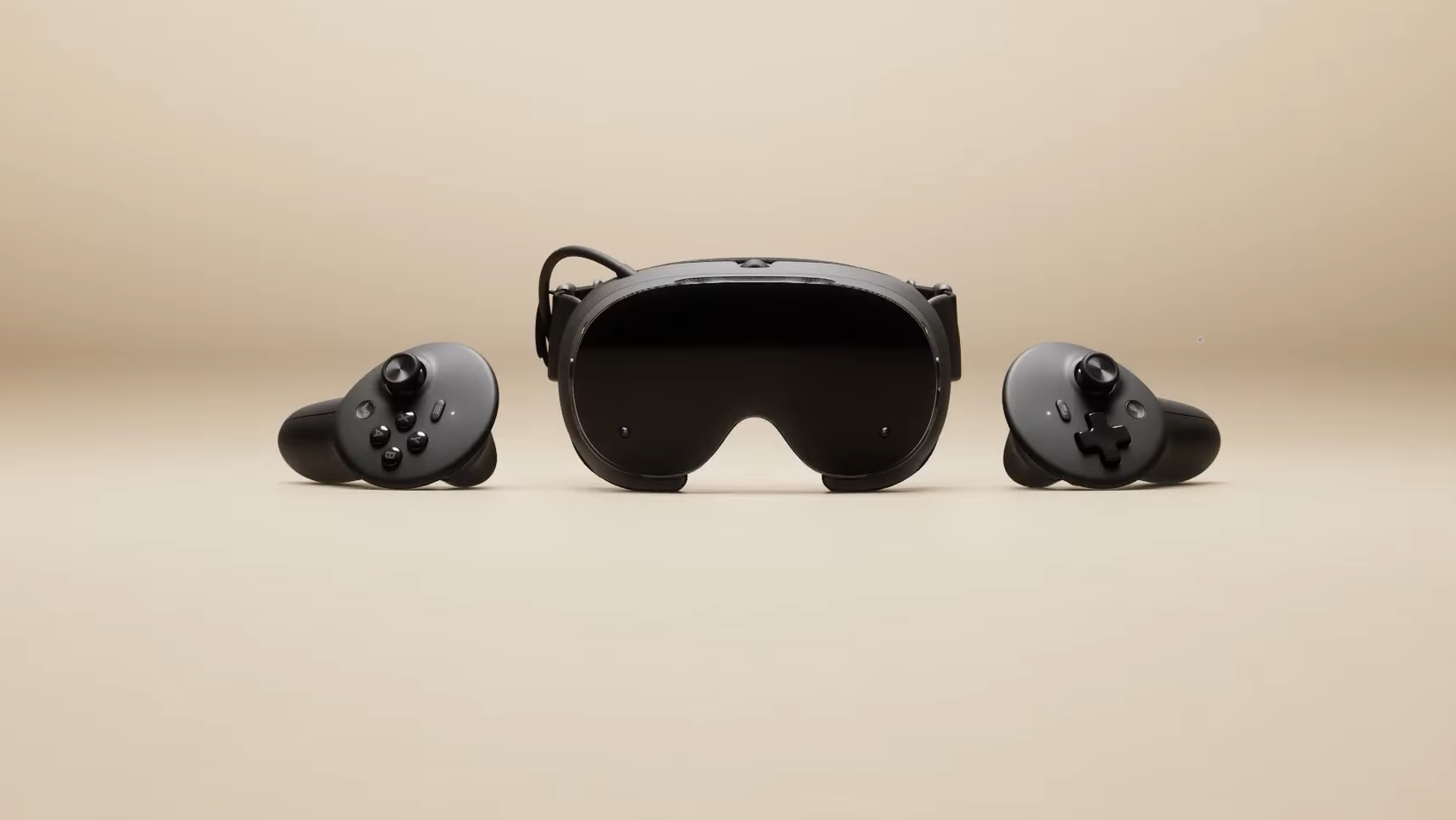
Valve has more or less already put this together. The Steam Frame, its upcoming VR headset, runs on a Snapdragon 8 Gen 3 and boots SteamOS natively on Arm, with FEX handling the x86 games. Valve’s own engineers put FEX’s overhead at 10 to 20 percent, and that’s a translation penalty most people won’t care about in practice.
The numbers people have already pulled out of FEX back that up. On a Radxa Orion O6, an Arm dev board rather than anything designed for gaming, testers have had DOOM 2016 running at around 60 FPS at 1080p, Portal 2 comfortably past 100, and The Witcher 3 sitting in the low 40s. Even on the GB10 in the Lenovo ThinkStation PGX I was able to get over 100 FPS in Cyberpunk 2077 at 1440p. In both cases, it’s a translation layer doing real work on chips that were never meant for games, especially in the case of the Orion O6, and the Frame has the advantage of being purpose-built for exactly this.
Every layer of the Steam Frame is built and shipped together, which includes the chip, the operating system, the drivers, and the translation which all arrive as the one package. It’s just like the Steam Deck, except there’s an additional x86-to-Arm layer, too. You don’t need to downgrade Steam, there’s no patching required for Vulkan support. The point is that it should run as one integrated stack, because Valve made all of it run together.
The Frame is a headset rather than a handheld, so I’m admittedly extrapolating somewhat here, but at the end of the day it’s more or less the same thing. It’s two displays, a chip for processing, and a GPU. There isn’t really much difference between SteamOS, Proton, and FEX running on a Snapdragon SoC in a headset and the same thing but in a handheld. Getting it running on the Steam Frame means many of the hard platform-level parts are already done, and they’ve been done by the company that arguably has been defining what a PC handheld even is.
For now, x86 is still the safe bet for gamers, and it would be disingenuous to pretend otherwise. The AMD chips in the Steam Deck and everything like it carry no translation overhead from a CPU perspective at all. No matter how efficient it is, translation always costs something, and that’s typically found in performance and in battery life. If you buy a handheld today, you’re almost certainly buying something that’s x86-based, and for good reason.
However, the barriers preventing Arm from being a go-to platform for gaming have been disappearing for a long time. The translation has been shockingly lightweight, and driver headaches most people experience only show up on devices, like the Nintendo Switch or an Android smartphone, that were never meant for this. A device that is built for gaming wouldn’t have those same headaches. Valve is already committed to shipping an Arm machine that runs a lot of your Steam library without much fuss, and the leap from there to a handheld is an incredibly small one.
In a few years’ time, when I replace my Steam Deck or my Ayaneo 3, I’m not really operating under the assumption that there’s an x86 chip inside anymore. I’m sure the Steam Frame will go a long way to proving the viability of Arm as a gaming platform, but the original Nintendo Switch is the one that really got me thinking about it first.