
The topic As AI spills everywhere with quick answers, research finds that the internet’s soul… is currently the subject of lively discussion — readers and analysts are keeping a close eye on developments.
This is taking place in a dynamic environment: companies’ decisions and competitors’ reactions can quickly change the picture.
A new collaborative study by UC Riverside computer and social scientists has found that as people increasingly rely on AI for answers, the internet risks losing the very thing that made it interesting in the first place: human emotion, lived experience, and messy, opinionated thinking.
The study compared how AI systems like ChatGPT and Gemini respond to subjective questions versus traditional web searches. The researchers asked both AI and web search engines opinion-heavy questions, such as whether governments should ban fossil-fuel cars or whether the US healthcare system needs reform, and analyzed the reasoning behind each response.
The researchers classified reasoning using Aristotle’s three pillars: logos (logic and facts), ethos (authority and credibility), and pathos (emotion and human experience). They found that human-written blogs use all three, while AI almost exclusively relies on logos.
“What we found is that humans essentially use all three of those, whereas LLMs essentially only rely on logos,” said co-author Kevin Esterling, a professor of public policy and political science. “It’s not like talking to a person at all. It’s just a machine that’s predicting what words ought to be said in response to a prompt.”
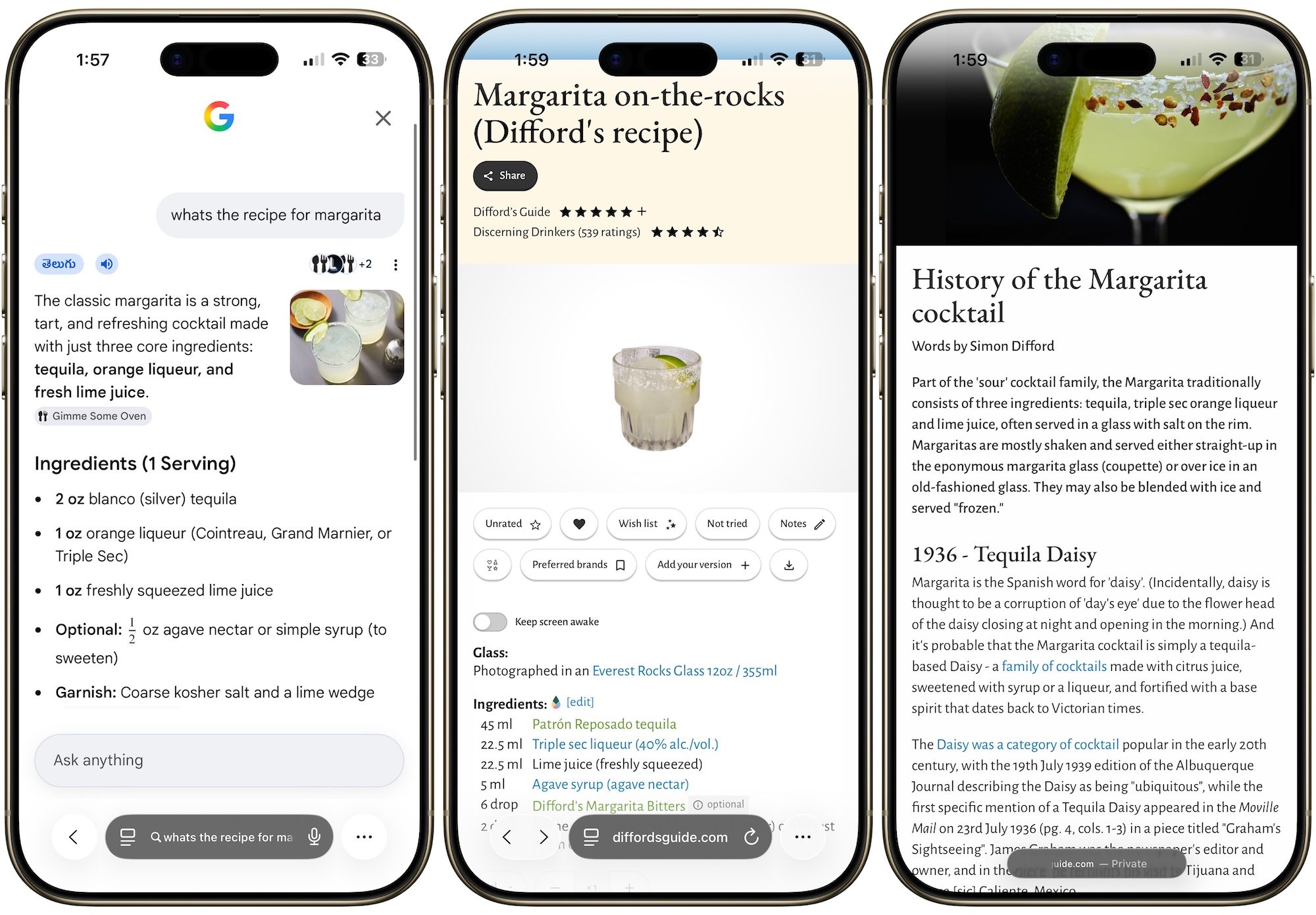
AI-powered search results do not include the nuances and human experience. The researchers gave a simple example to explain the difference.
When you search for a margarita recipe, an AI might give you a clean, competent answer instantly. But browsing a cocktail blog, you might stumble on the fact that the margarita is named after the Spanish word for daisy and was accidentally created by an Irish bartender in Tijuana who grabbed the wrong bottle.
Not only is the story more interesting, but it also gives you a tidbit you can share with your friends while sharing the next pitcher of margarita, making the experience even more rewarding.
As more people skip traditional web searches in favor of AI summaries for topics like health, politics, and ethics, society will gradually lose exposure to the diverse human reasoning that shapes how we understand the world. The internet’s soul might not be gone yet, but it will surely quietly fade.