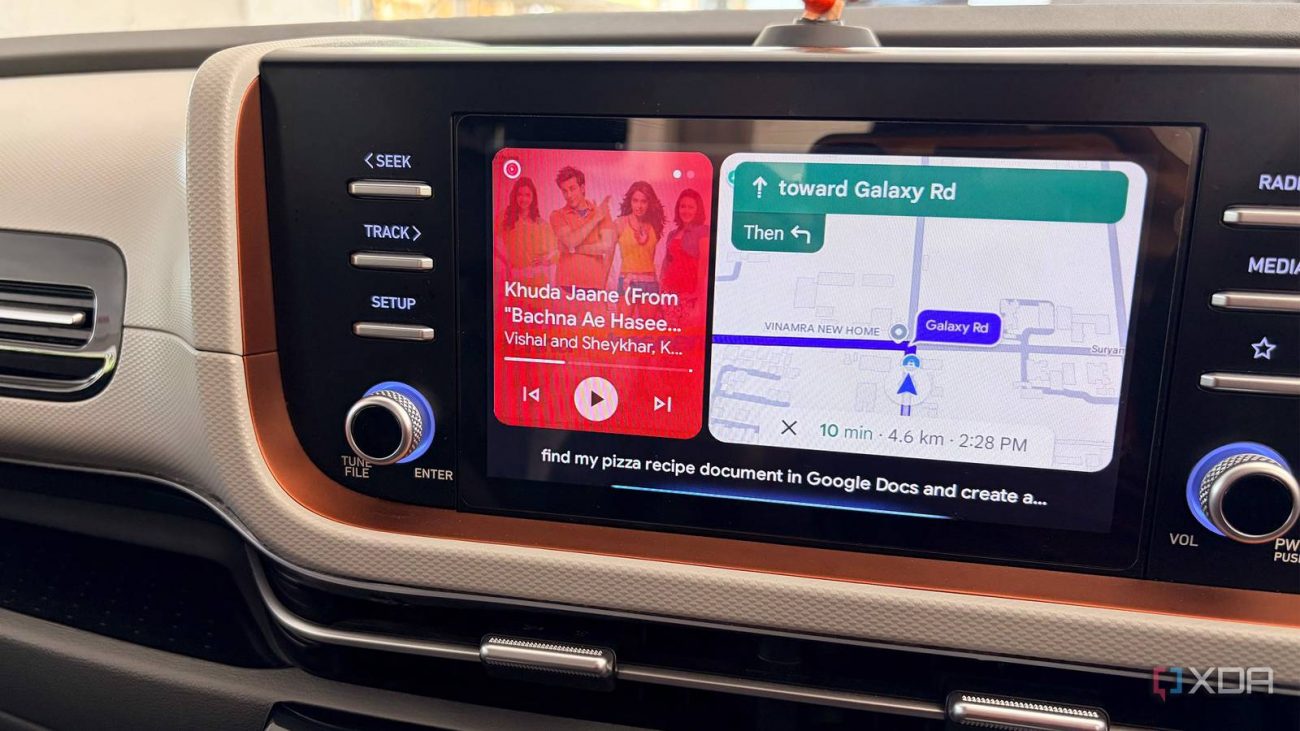
The topic I tested Gemini in Android Auto for a week, and it changed how I use my car is currently the subject of lively discussion — readers and analysts are keeping a close eye on developments.
This is taking place in a dynamic environment: companies’ decisions and competitors’ reactions can quickly change the picture.
When Google first announced Gemini’s integration in Android Auto, it was easy to dismiss it as just another coat of paint on a familiar voice assistant. But after putting it through its paces during my daily commutes, it became clear that I had underestimated the upgrade.
Gemini behind the wheel isn’t just slightly faster or mildly better at understanding accents; it changes the on-the-go computing while you drive.
Initially, I was cynical about the ‘AI everywhere’ push and expected it to be a distraction while driving. However, Gemini proved me wrong.
If your dashboard is still defaulting to the classic Google Assistant, you have to trigger the handoff directly from your phone first. The car’s infotainment system is simply mirroring your phone’s primary assistant ecosystem.
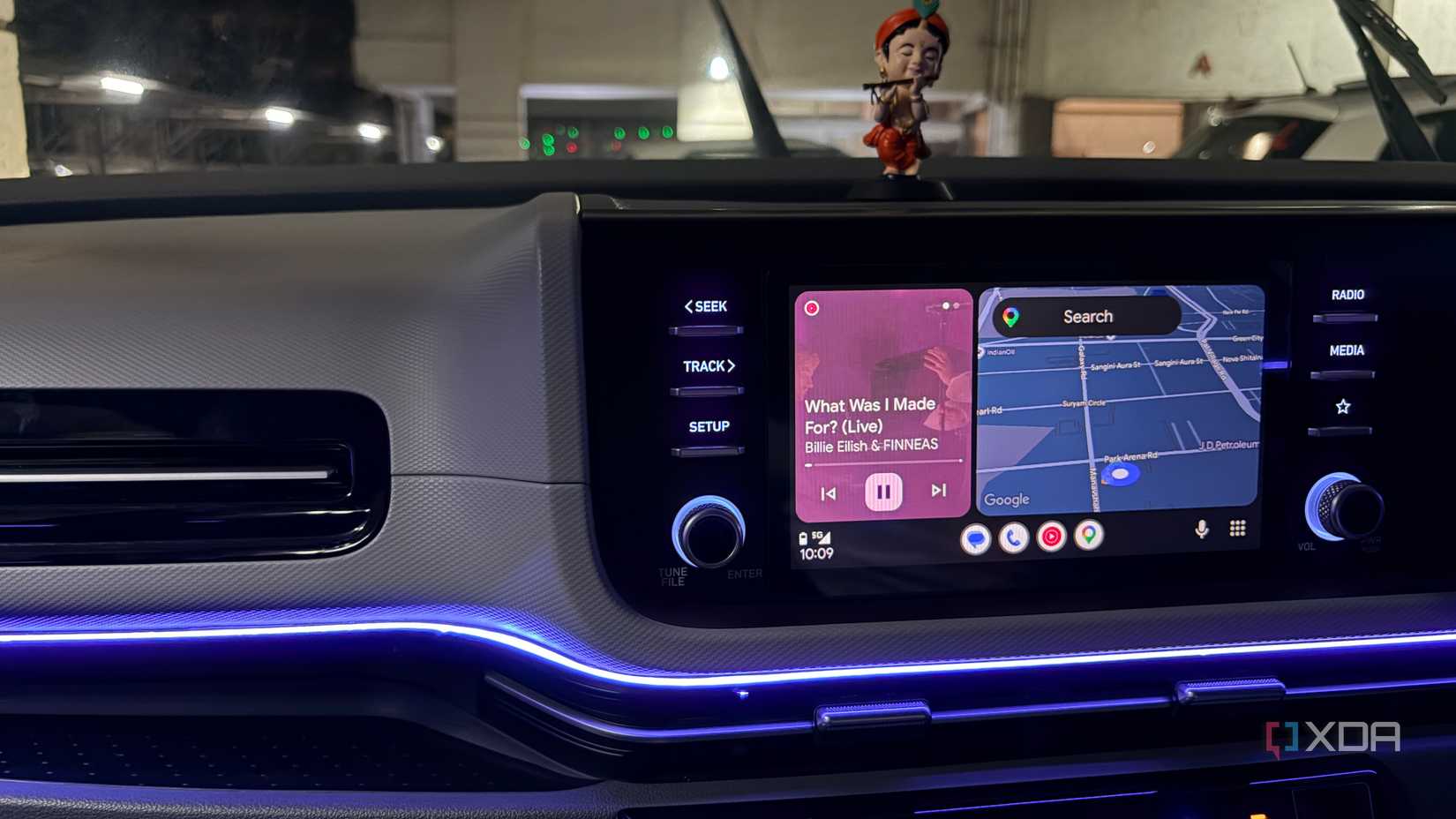
You can also try installing Android 17 developer beta to unlock Gemini on your Android Auto system. Now, Gemini is only as smart as the data it can access. To unlock its true power, you need to head into your phone’s Gemini Settings and enable the Google Workspace and YouTube Music toggles under the Personal Intelligence menu.
Once those settings are dialed in, and you connect to Android Auto, the difference between the old Assistant and Gemini becomes obvious. Let’s check it in action.
To see why Gemini feels like a generational leap over Google Assistant, you have to throw a messy, multi-intent prompt at it while moving down the road.
Last week, I fired up Gemini and asked for something like “Take me to Shivani Clean Care and see if there are any Jio petrol pumps on the route,” and it handled the query without breaking a sweat. Instead of getting confused by two separate requests crammed into one sentence, Gemini’s underlying architecture maps out a logical execution sequence behind the scenes and mimics how a human co-pilot thinks.
Instead of a frustrating “I don’t understand,” Gemini updates the dashboard smoothly. It calculates the route to the destination, highlights a Jio-bp station directly along the path, and responds with natural audio: ‘Navigating to Shivani Clean Care. I found a Jio-bp station right along your route on Varachha road – it adds about two minutes to your drive. Would you like me to add it as a stop?’ You can actually think out loud and be confident that your car is actually listening.
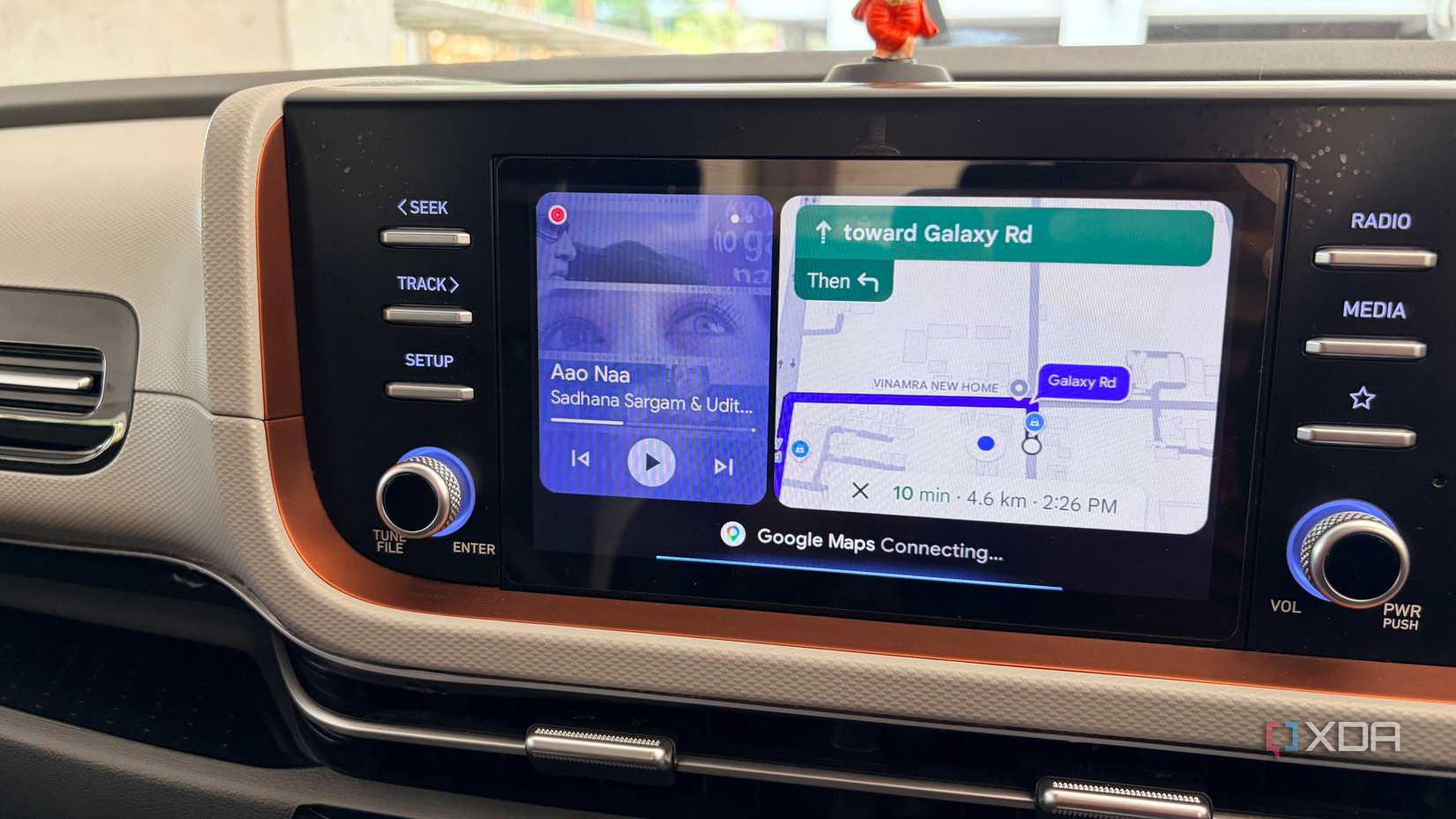
This is where the magic of the Google Workspace extension shines. When you are behind the wheel, your car effectively becomes an extension of your desktop workspace. Just the other day, I was comparing the best FTP clients for a project. I had compiled all my notes, technical specs, and software into a structured Google Doc.
Later, while driving, I realized I needed a clean checklist for those specific tools ready to go the moment I stepped back into my office, so I could start testing them one by one. Instead of waiting until I parked, pulling out my phone, and awkwardly copying and pasting text, I handled the entire cross-app workflow using nothing but my voice through Android Auto. I asked, “Open my recent document about the best FTP clients, extract all the software tools listed in it, and create a checklist in Google Keep.” By the time I pulled into my driveway and walked up to my desk, the heavy lifting was already done.
Perhaps the most satisfying element of using Gemini behind the wheel is YouTube Music integration. Just the other day, a specific melody was stuck in my head while I was driving, but I couldn’t remember the name of the track. All I knew was its context. I hit the steering wheel button and said, “Play that intro song from the Dhurandhar movie.”
Gemini took that vague descriptor, treated it as a query, and within two seconds, it figured out exactly what my brain was struggling to recall: it identified ‘Ishq Jalakar’ as the opening track, loaded it via the YouTube Music extension, and the track started playing over my car’s speakers. It gets even better. If you don’t even have the context of a movie or an album name, Gemini can parse audio characteristics. If a tune is floating around in your head, you can just invoke the assistant and hum the melody directly to your dashboard.
Ultimately, Gemini’s integration into Android Auto proves that the most valuable AI isn’t one that writes poetry or codes a website from scratch; it’s the one that handles the logistical chaos of real life. With a switch from Google Assistant to Gemini, Google has quietly fixed the most frustrating aspect of the in-car experience.
Gemini delivers exactly what a driver actually needs: a reliable, frictionless, and intelligent co-pilot that lets you keep your hands on the wheel and eyes firmly on the road. Of course, these are just the early days of Gemini in Android Auto. With the support of more apps coming, I can’t wait to see how Google improves it in future.
You’ll notice these changes if they’re reversed after the fact