The topic The first hour with a Windows gaming handheld is still too confusing, and… is currently the subject of lively discussion — readers and analysts are keeping a close eye on developments.
This is taking place in a dynamic environment: companies’ decisions and competitors’ reactions can quickly change the picture.
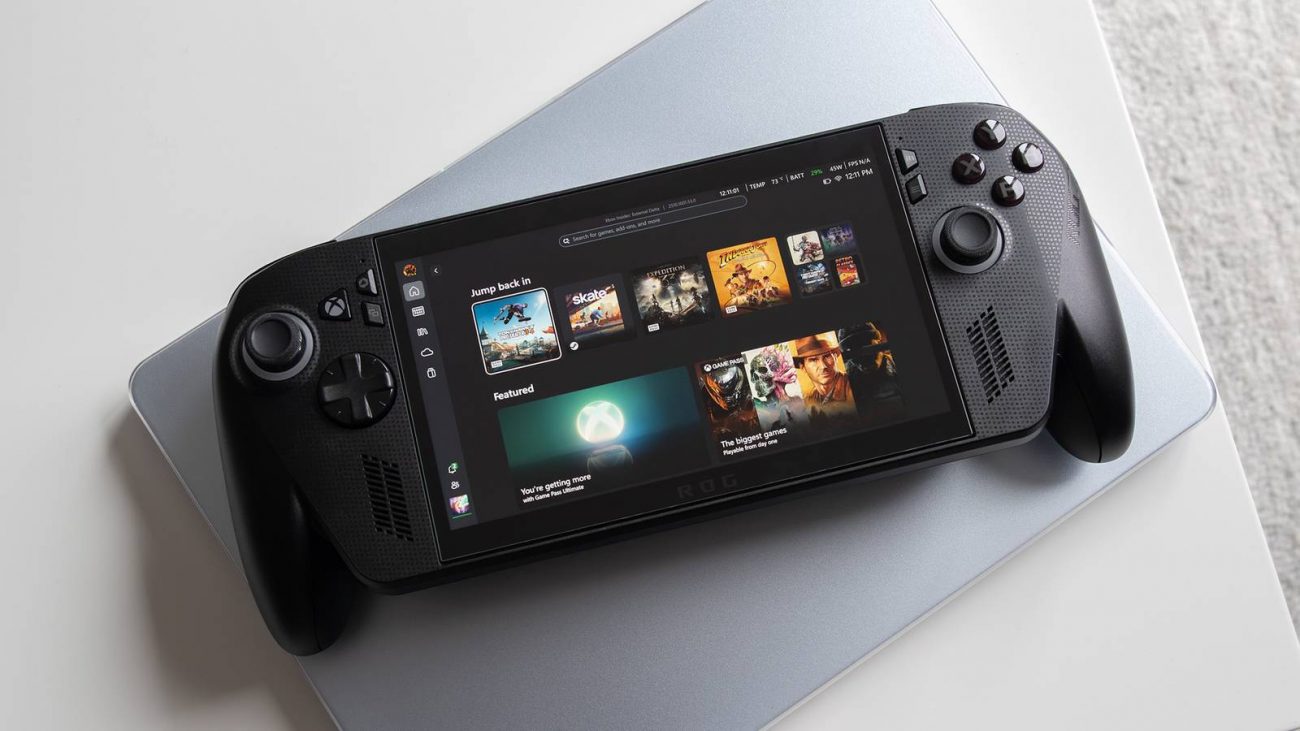
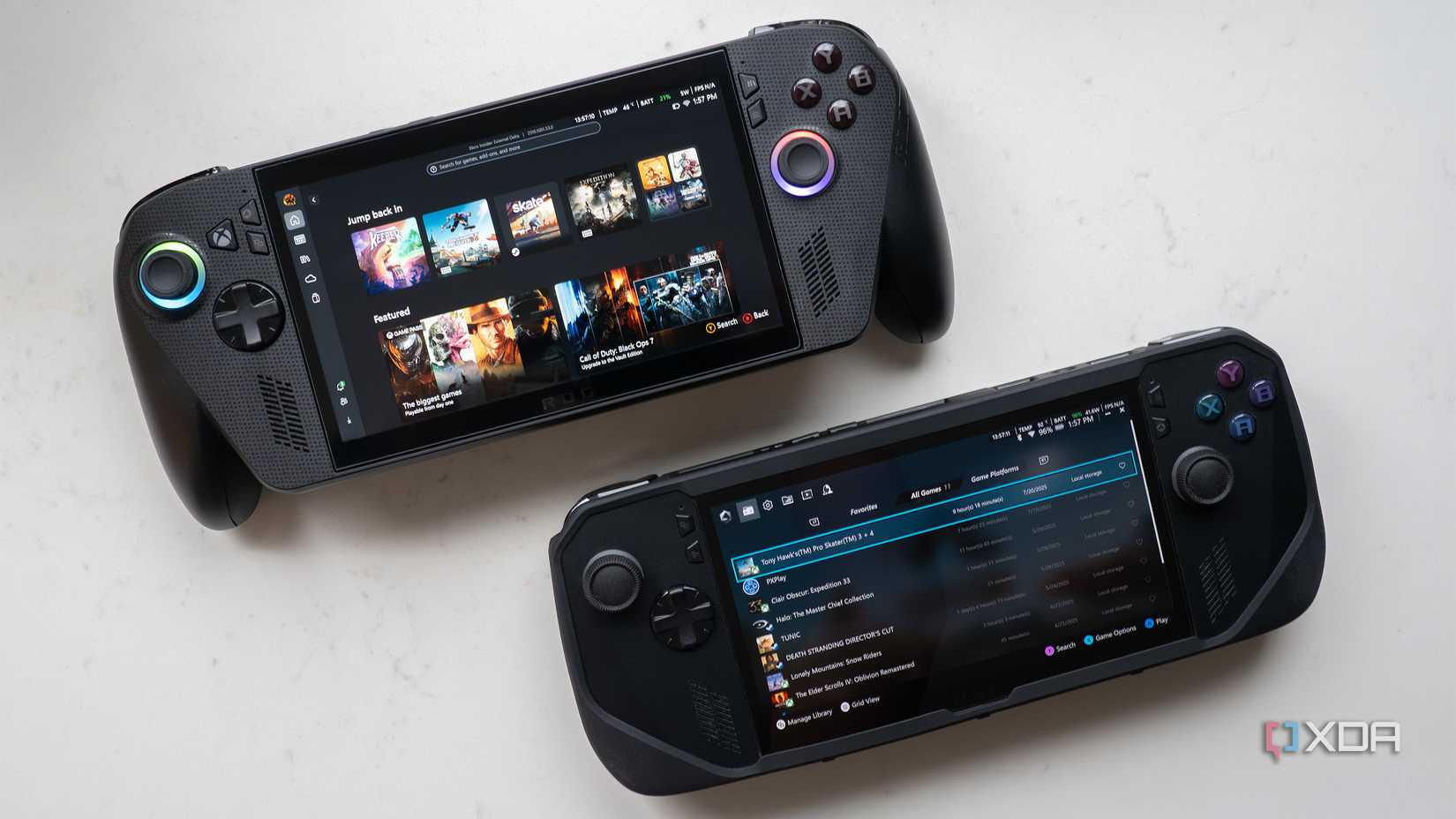
I really like the ROG Xbox Ally X. In fact, I’d go so far as to say it’s my current favorite gaming handheld.
The fact that I can truly play all the same titles my gaming PC handles with ease, but with lower graphics settings, is spectacular. Of course, I’m not hitting 120fps or, in most cases, even 60fps on my Xbox Ally X, like I can with my GeForce RTX 5090-powered gaming PC, but games are typically playable at medium settings at 30fps (sometimes dropping the resolution to 720p can kick the fps up a bit). It’s the gaming setup I’ve always wanted — I can game away on my gaming PC in my office, and also bring a similar experience with me on the go with the Xbox Ally X.
I also appreciate the versatility Windows 11 offers. It makes it easy to turn the handheld into an emulation powerhouse with simple tools like EmuDeck, or to dive into the wild world of N64 decompilations with The Legend of Zelda: Ocarina of Time’s Ship of Harkinian and Banjo-Kazooie’s Banjo: Recompiled. Then there’s Xbox Game Pass and its sprawling library of games, which, for the most part, are instantly playable on any Windows 11-powered handheld. Sure, you can do all of this on Valve’s Steam Deck, but if you’re unfamiliar with Linux’s intricacies, this can get confusing very quickly, even for moderately tech-savvy people like myself.
At the same time, Windows 11 is also the ROG Xbox Ally X’s (and any Windows 11-based handheld’s) most significant weakness. Even with Xbox Mode, Microsoft’s operating system just doesn’t feel like it belongs on a handheld, and this is especially apparent during setup.
Banjo: Recompiled modernizes one of my favorite childhood N64 games in the best way possible.
The first few parts of the setup process aren’t awful. You turn on the Xbox Ally X, select your location, connect to your Wi-Fi, and name your device. Next, the Windows 11 update onslaught begins. You wait for the sizable update to install, your device restarts, and then you assume it’s time to start downloading a few games, right?
Next up, it’s time to sign in to your Microsoft account, which, if you’re coming from the more traditional console/handheld gaming world, isn’t that out of the ordinary, since you also need to sign in to the Xbox Series X, PlayStation 5, Steam Deck, and Switch 2 with each device’s respective account. Once that’s done, it’s fingerprint scanning time, setting a pin (there really should be a way to turn this off), a bunch of annoying Windows 11 diagnostic services questions, and lastly, registering your handheld with Asus (this one is optional).
At this point, it’s already a lot. I remember being surprised that, given the hype surrounding the ROG Xbox Ally X’s Xbox Mode, the handheld’s initial setup process wasn’t more streamlined — and you’re still not done either. Here’s where things start to get notably more confusing and, at times, downright frustrating. Next up, you need to sign in to your Xbox account yet again (your username and password should already be saved), which finally boots you into the stripped-back Xbox Mode.
Next, you need to navigate to Asus’ Armory Crate app by pressing the Xbox button and opening it. Once the app is installed, head to the Update Center to download driver updates for the handheld. Now, it’s time to update your apps and the Xbox app. To do that, you need to long-press on the Xbox button and switch to Windows 11 Desktop Mode from Xbox Mode.
Then, just like you would on any Windows 11 PC, you launch the Microsoft Store and check for updates. Lastly, you’ll need to check for even more Windows 11 updates in the Settings menu. If you’ve used a handheld like the Steam Deck or Switch 2, you probably assumed that after you get through the initial setup, updates would be more streamlined going forward — wrong. You’ll need to constantly check for Armory Crate, Windows 11, and Microsoft Store app updates. Even the biggest fans of Windows 11 gaming handhelds will admit this process is convoluted and doesn’t belong on a handheld.
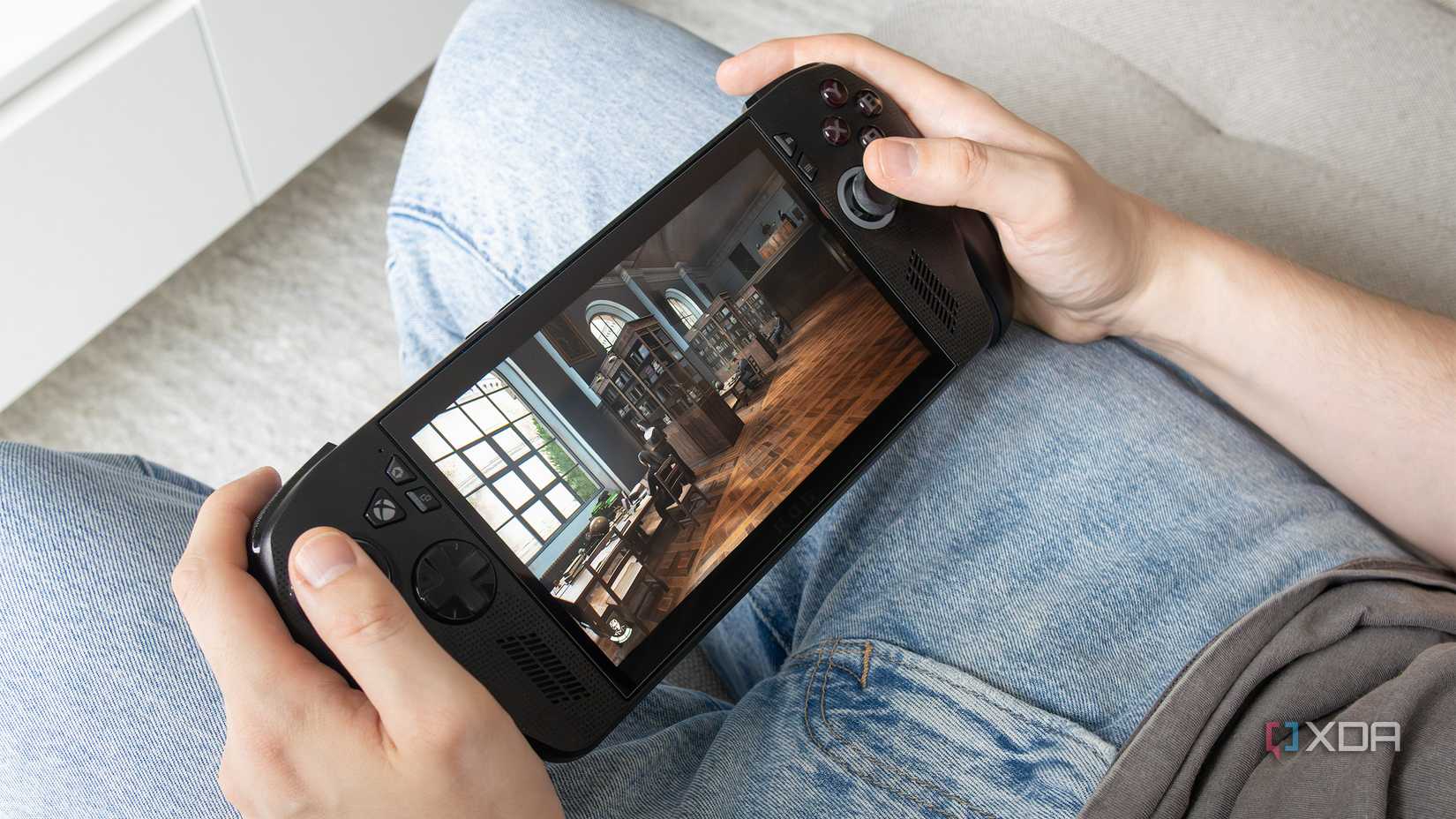
The first time I set up the ROG Xbox Ally X, I was shocked that the setup and update downloading process wasn’t quicker and more straightforward, but I assumed that, after the handheld’s release, Microsoft would release an update consolidating all these downloads into one location. That hasn’t happened yet, and it doesn’t look like it will any time soon.
If, like me, you’ve used a Steam Deck before, this feels absolutely wild. With Valve’s handheld, you turn it on, connect to Wi-Fi, sign into your Steam account, and… that’s pretty much it. If you want to make sure the Steam Deck is up to date, go to Settings > system > Software Updates. Even game downloads are more straightforward; you just click the Steam button and navigate to the Downloads tab.
If you’re coming from the console world, the Steam Deck’s setup process and your first few hours with the handheld will make way more sense, whereas the ROG Xbox Ally X and other Windows 11 handhelds take a bit of time to wrap your head around. Hunting down updates in three locations is second nature to me now, and I always make sure I switch to Windows 11 mode to check for app and OS updates at least once a week.
There are other issues with Windows 11 handhelds, too, including the lack of a reliable sleep mode. This makes it difficult to use the Xbox Ally X in short bursts in the same way that you would with the Steam Deck or Switch 2. Switching to Hibernate from Sleep in Windows 11’s Settings menu helps to some extent, but I’ve still encountered situations where games freeze, become glitchy, or the sound doesn’t work when I pick the ROG Xbox Ally X again.
You also need to switch to Windows 11 mode to install other game launchers, such as Steam or the EA app. In a way, it feels like Windows 11 has been forced onto handhelds like the ROG Xbox Ally X, giving players two distinct operating systems, with features split between Xbox Mode/Armory Crate and Windows 11.
Sure, it works, but it doesn’t feel cohesive, and this is especially noticeable during your first few hours with a Windows 11 handheld. If Microsoft’s Xbox Mode is really going to power its next-gen console Project Helix, it still has a long way to go.
The new display technologies is set to transform the TV landscape in 2026.