Earth’s atmospheric atoms and molecules travel to the moon, offering a record and resources for lunar bases.
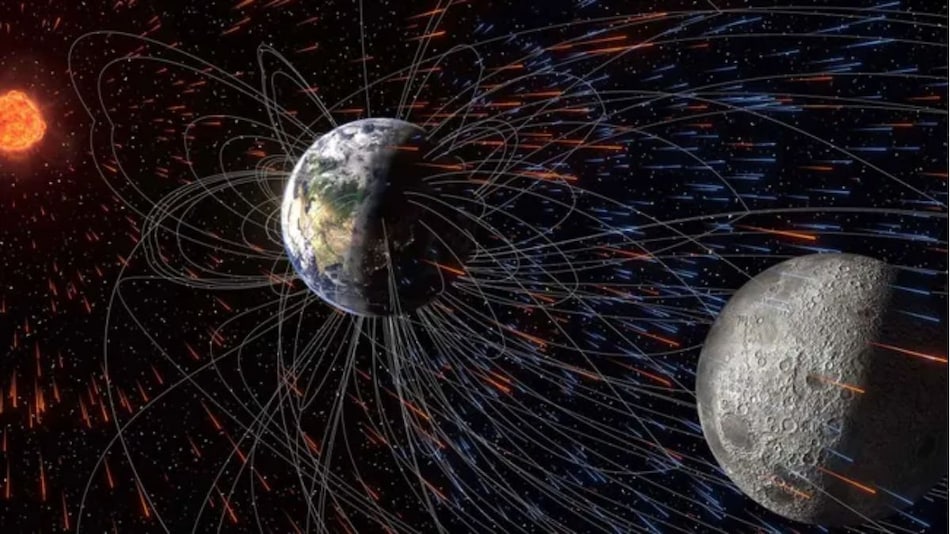
Particles from Earth’s atmosphere travel to the moon, potentially aiding future lunar bases.
Click Here to Add Gadgets360 As A Trusted Source

When astronauts return to the moon, they may find a small piece of Earth waiting for them. New research shows that atoms and molecules from Earth’s atmosphere have been traveling across space to the lunar surface for billions of years. These include elements like nitrogen, water, carbon dioxide, helium, and argon, which were found in puzzling amounts in Apollo mission lunar samples. The findings imply that the moon may harbor a long-term record of Earth’s atmosphere — as well as a supply of volatiles that could be useful to future lunar bases.
Earth’s Magnetic Field Channels Atmospheric Particles to the Moon, Preserving Climate History
According to a report published in Communications Earth & Environment on December 11, 2025, researchers at the University of Rochester simulated how Earth’s atmospheric particles could make their way to the moon. The study shows Earth’s magnetic field directs particles toward the Moon, unlike earlier beliefs about early atmospheric escape.
The research demonstrates that this process of atmospheric transport persists from the ancient past to the present, resulting in a gradual and steady deposition of volatiles on the surface of the moon. The particles could also be used by scientists to study Earth’s climate and environmental history, which has been saved in lunar soil for billions of years.
Earth’s Atmospheric Leakage Offers Clues for Planetary Science and Lunar Resources
The findings also have wider relevance for planetary science, the researchers say. Understanding atmospheric escape from Earth allows scientists to learn about the climates, habitability, and magnetic fields of planets like Mars.
Long-term atomic leakage could also form water and volatile deposits directly on the moon over eons, favoring habitats and missions alongside comet and asteroid sources.