
The topic Linux gaming is getting faster because Windows APIs are becoming Linux kernel… is currently the subject of lively discussion — readers and analysts are keeping a close eye on developments.
This is taking place in a dynamic environment: companies’ decisions and competitors’ reactions can quickly change the picture.
In March 2026, Linux crossed five percent of Steam’s user base for the first time, an all-time high for an operating system that spent two decades as a novelty when it came to any kind of gaming. Microsoft’s end-of-support deadline for Windows 10 last October pushed many users to look at alternatives, and the Steam Deck has quietly turned millions of people into Linux gamers without them really thinking about it, leading to more widespread adoption on desktop machines.
Most of that progress used to happen inside a piece of software called Wine, the translation layer that convinces Windows games they’re running on Windows. Valve’s tuned version of Wine, called Proton, is what makes Steam Play and the Steam Deck work. For years, every meaningful improvement to Linux gaming came from changes to Wine and Proton themselves. That’s still true, but increasingly the most important changes are happening one layer deeper, inside the Linux kernel. The latest example of that is something called NTSYNC, a kernel-level driver that has offered great performance gains over previous versions of Wine, and is loaded by default on every Steam Deck that’s up-to-date.
NTSYNC is a small piece of driver added directly to the Linux kernel that gives it a native implementation of a set of Windows-specific tools that games depend on to coordinate themselves.
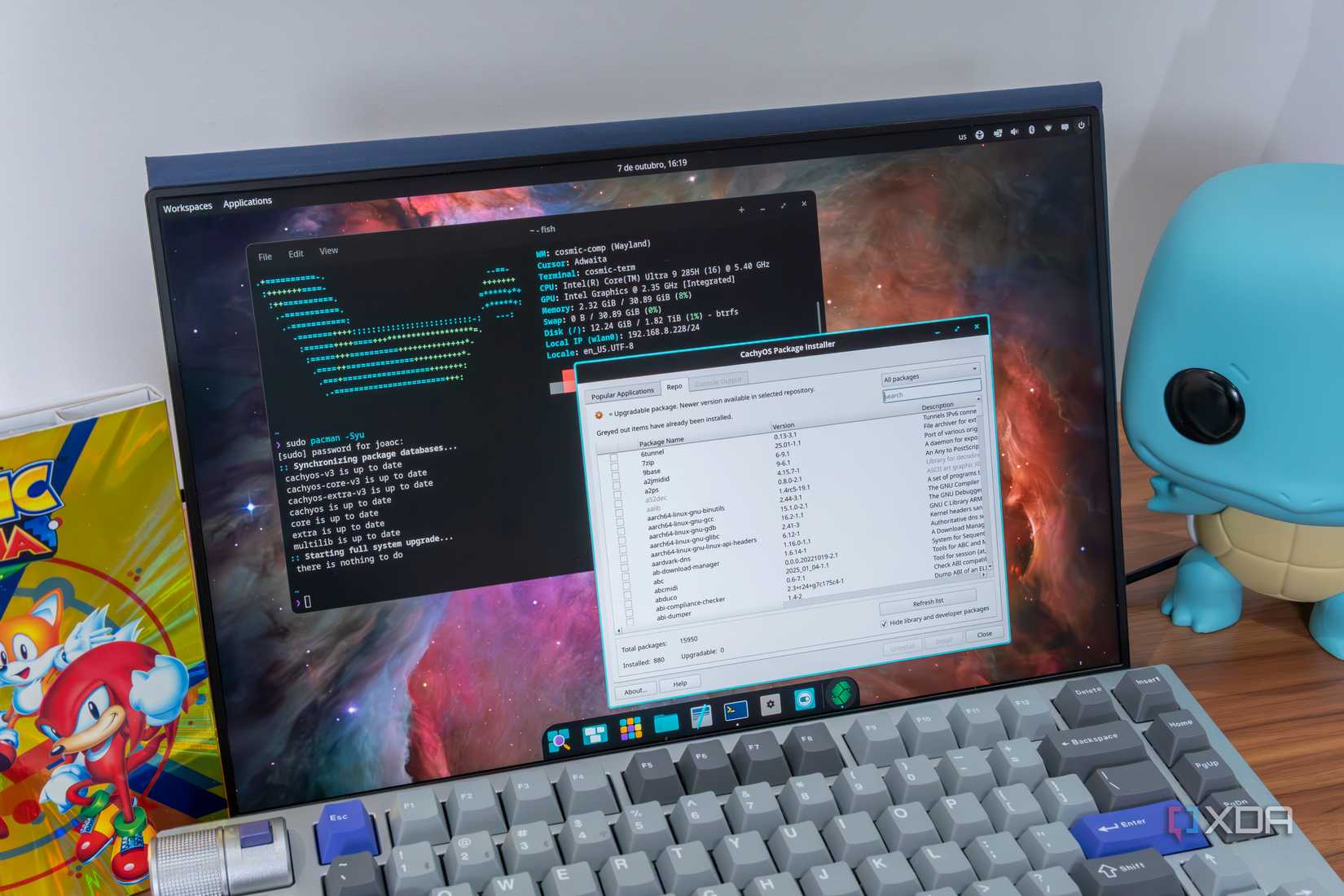
Modern games juggle dozens of things at once. While you’re playing, your CPU manages the rendering pipeline, loading assets, running physics, processing audio, handling AI NPC routines, and tracking inputs, all in parallel across multiple cores. All those jobs constantly have to coordinate so they don’t trip over each other. Windows handles this coordination by using a specific set of mechanisms, and before NTSYNC, Wine had to mimic these mechanisms using things like esync and fsync, which both worked, but didn’t always match Windows exactly. NTSYNC builds these mechanisms straight into the Linux kernel for the first time, and it means Wine doesn’t have to emulate anything anymore. The developer-facing API calls don’t actually change, Linux just knows how to answer them natively.
NTSYNC isn’t the first time Linux has gained a new feature specifically because Windows games needed it. A few years back, Linux added a way for software to wait on several events at once, which is something Windows had built in for decades, but Linux didn’t. Wine had been working around the gap with awkward tricks until the kernel finally got native support.
This work is driven by Valve, by CodeWeavers (the company that employs many of the core Wine developers, including NTSYNC’s author Elizabeth Figura), and by a steady stream of contributors who want Linux to be a real gaming platform without depending on out-of-ecosystem patches forever.
Valve wants to make it possible for gamers to play anywhere.

The headline performance gains look great, but they need some context. The eye-catching 40 to 200 percent FPS gains cited in NTSYNC’s original benchmarks were measured against unmodified upstream Wine, which almost nobody uses to play games on Linux anymore. Most Linux gamers, including every Steam Deck owner, use Proton, which already has fsync. Compared to fsync, NTSYNC’s performance gains are far more modest. The games that benefit most from the change to NTSYNC are games that were really struggling before. Anything that was running at decent framerates beforehand is still going to run fine.
Linux is a completely different beast than it was a decade ago.
Pierre-Loup Griffais, an engineer at Valve, has gone on the record to say that fsync was already fast enough, and despite that, Valve still shipped NTSYNC in stable SteamOS in March anyway, which speaks to the fact that fsync is still a workaround at its core, and can be the cause of issues outside of poor raw FPS.
These old workarounds got subtle edge cases wrong in ways that produced occasional hitches, deadlocks, or weird behavior in specific games, which are bugs that don’t show up on benchmark charts but can absolutely ruin individual experiences. NTSYNC fixes those at the source by matching Windows behavior exactly, and that means as soon as your favorite distro moves to the new kernel version, whether it be Bazzite, CachyOS, Fedora, or a flavor of Ubuntu, they all get this much-needed fix.
Valve’s full SteamOS release will change PC gaming again, and here are some of the most important ways.
Linux has grown so much in the gaming department. Where there once was nothing but clever Wine patches and community workarounds now lies support from gaming behemoths like Valve, driving changes to the Linux kernel itself. NTSYNC won’t be the last time a piece of Windows gets rebuilt inside Linux because gamers needed it, and with more than five percent of Steam’s user base now running Linux, the incentive to keep doing it has never been stronger.