Researchers have created stretchable OLED materials using flexible polymers enabling durable, fully flexible displays for wearables.
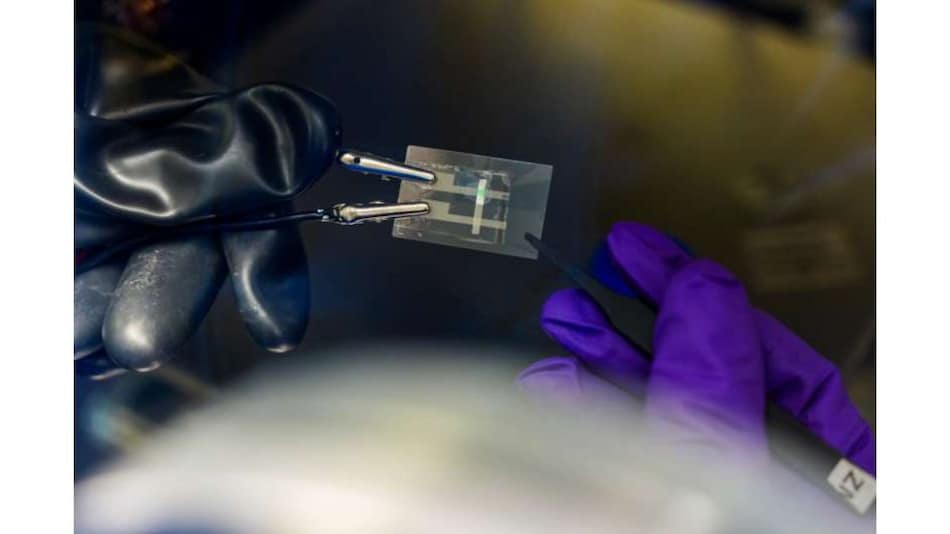
New UChicago study clears major hurdles in developing advanced stretchable OLED displays.
Click Here to Add Gadgets360 As A Trusted Source

New materials that enable OLED screens to stretch have been reported by University of Chicago researchers. To get around previously inflexible layers, they developed stretchable conductive polymers and an aluminium electrode that resembles gel. High-end screens are currently powered by OLEDs, but flexibility could enable wearable technology and medical implants on curved surfaces. When aluminium is mixed with a gallium-indium alloy, for example, the metal “crackles” under strain instead of shattering because liquid metal flows to seal the cracks.
Flexible OLED materials
According to the study, one key innovation is a flexible cathode. Making aluminium stretchable is hard, but the team took a counterintuitive approach. Embedding aluminium in a gallium–indium alloy makes the cathode ‘crackle’ under strain instead of shattering, as liquid metal fills the gap. Remarkably, ageing tests showed the electrode remained conductive even after repeated stretching.
The researchers also developed a stretchy polymer layer with conductive rings linked by flexible chains, balancing conductivity with elasticity. Tuning the ratio of conductive rings to flexible segments adjusts its electrical performance. Together, these advances clear the path to fully stretchable OLED screens.
Wearable technology and flexible devices
Stretchable OLEDs would allow displays to be integrated into clothing and medical patches, among other applications. They would also permit bendable phones and tablets to be wrapped around surfaces.


The team also notes applications in implantable sensors and robots with realistic skin. Such screens could provide light sources for wearable diagnostic patches-ones that might be used to monitor conditions such as diabetes or heart disease, for instance. Comprising materials with sustained high electrical performance under strain, these enable the development of truly flexible electronics and wearables.