A new AI-driven global survey shows Mars’ dark slope streaks form through dry dust avalanches, not liquid water.
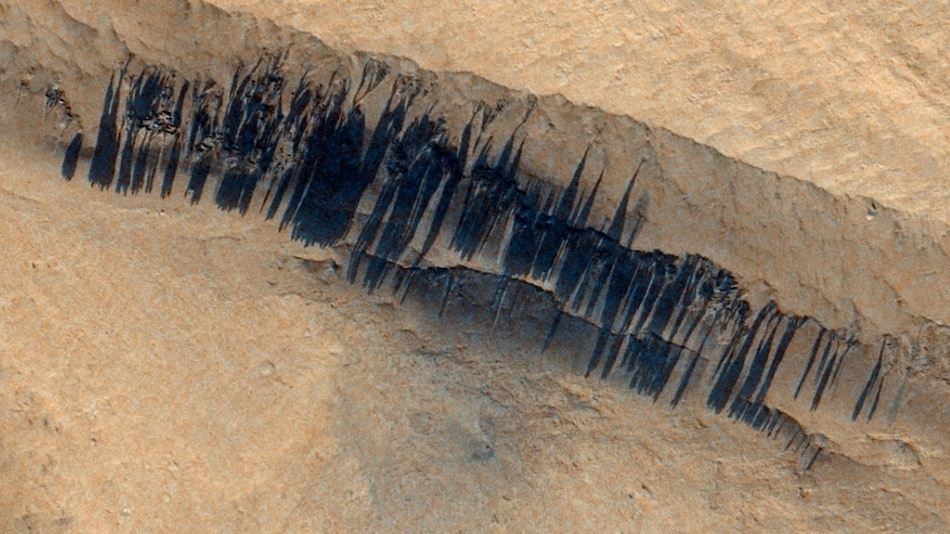
AI analysis of MRO data reveals dry dust avalanches cause Martian streaks
Click Here to Add Gadgets360 As A Trusted Source

Repeated slope lineae created by dark, seasonal streaking of Martian slopes have long been a puzzle to scientists. Scientists have argued over the possibility of them being an indicator of flowing briny water or dry sand avalanches. It is now evident that the streaks are products of dry processes and not of liquid water, as NASA and ESA mission data and AI analysis demonstrate. A recent research says that there is practically no trace of water; these characteristics can be explained by winds and dust.
Machine Learning Maps Martian Streaks
According to the new study, researchers at the University of Bern used deep learning on more than two million slope-streak images from NASA’s Mars Reconnaissance Orbiter to build a global “streak census.” They found the dark streaks cluster in five hotspot regions and that only about 0.1% of new streaks are tied to meteoroid impacts or marsquakes. In contrast, most streaks appear in the southern summer when dust deposition and wind speeds peak. This points to dry dust avalanches as the main cause—grains of sand and dust sliding downhill with no need for liquid water.
Implications for Mars Exploration
Even without liquid water, slope streaks stir up enough Martian dust each year to rival global dust storms. This insight helps settle long-running debates about Mars’ environment and habitability. Understanding these dry processes sharpens our view of how and when Mars lost its water and whether life could once have existed. Scientists stress that global monitoring by orbiters is crucial to track Mars’ dynamic surface. These observations will help answer key questions about Mars’ climate history and guide exploration.