The topic AMD’s new memory tiering tech may soon turn storage into RAM, but your PC… is currently the subject of lively discussion — readers and analysts are keeping a close eye on developments.
This is taking place in a dynamic environment: companies’ decisions and competitors’ reactions can quickly change the picture.
Amid the growing memory crisis, AMD seems to have found a rather unconventional plan to reduce reliance on DRAM. On June 15, the company acquired MEXT, a California-based startup behind the development of an AI-driven memory tiering system capable of making NAND flash storage behave like DRAM.
It’s a clever approach to one of the industry’s most pressing bottlenecks, but as intriguing as the concept may sound for everyday PCs, AMD’s ambitions for the technologies appear rooted in the data center, where memory costs and increasingly demanding AI workloads have made the capacity a problem of their own.
As the global markets find themselves in the middle of a memory crisis, the obvious solution to a memory shortage is, well, more DRAM. The problem is that DRAM is becoming increasingly expensive. Memory alone is expected to account for roughly 30% of hyperscaler data center expenditure this year, which marks a fourfold increase since 2023. At those prices, simply throwing more memory at growing AI workloads is becoming an increasingly difficult proposition for cloud providers trying to keep infrastructure costs under control. That’s the demand side of the issue.
The supply side, on the other hand, comes with an entirely different set of challenges. The DRAM market is dominated by just a handful of manufacturers, with Samsung, SK Hynix, and Micron collectively accounting for the overwhelming majority of global output. Sure, just “expanding production” could help, but that requires billions of dollars in investment and decades of lead time, making the supply orders of magnitude less flexible than the current industrial appetite for memory.
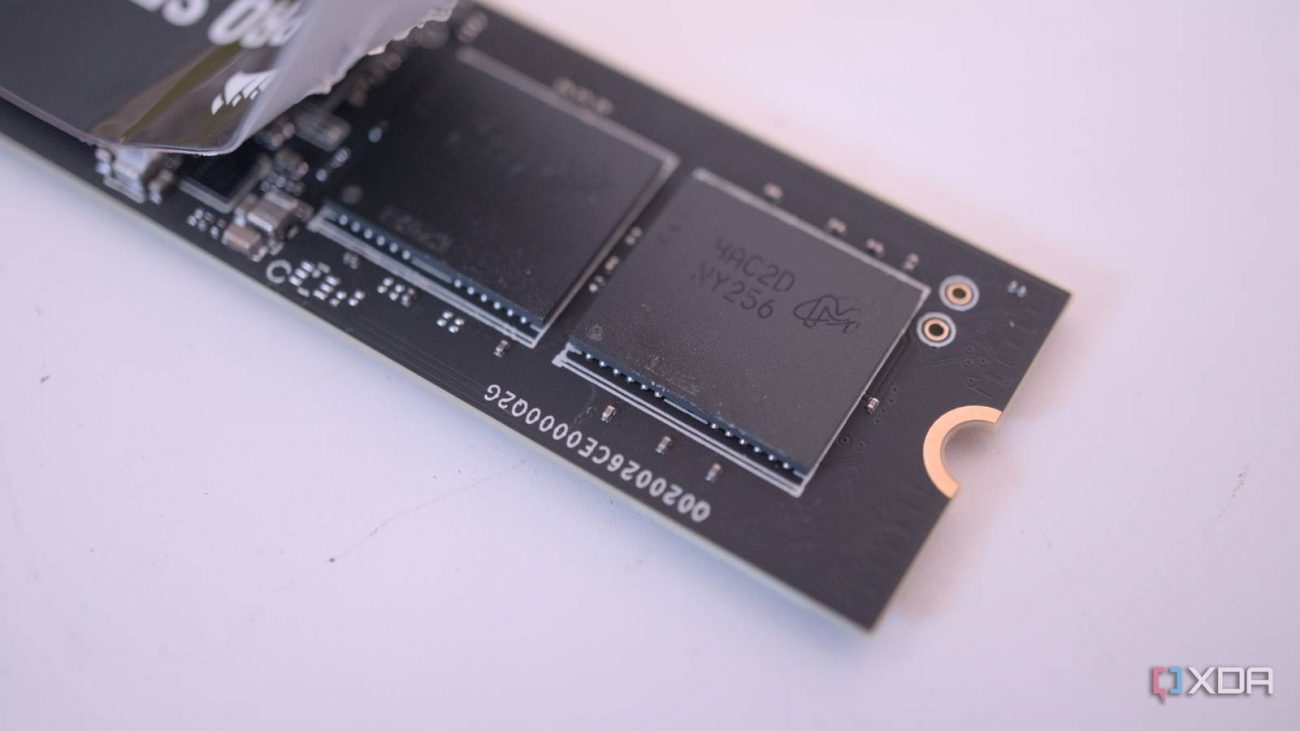
Since NAND flash is comparatively cheaper and more abundant, it seems like the natural answer, but there’s a catch, and that relates to speed. Flash storage is far too slow to replace main memory directly without introducing a punishing performance penalty. It’s this very problem that MEXT’s Predictive Memory Engine seeks to solve. Instead of relying on additional DRAM, the systems running MEXT’s proprietary technologies will analyze memory access patterns and predict which data sitting in the NAND flash will be needed next. Those pages are then moved into DRAM before the application or the OS asks for them. Simply by using an algorithm that dynamically predicts future memory access patterns, the engine anticipates demand before latency becomes an issue.
CAMM2 arrived on laptops two years ago, but desktop adoption is still four years away
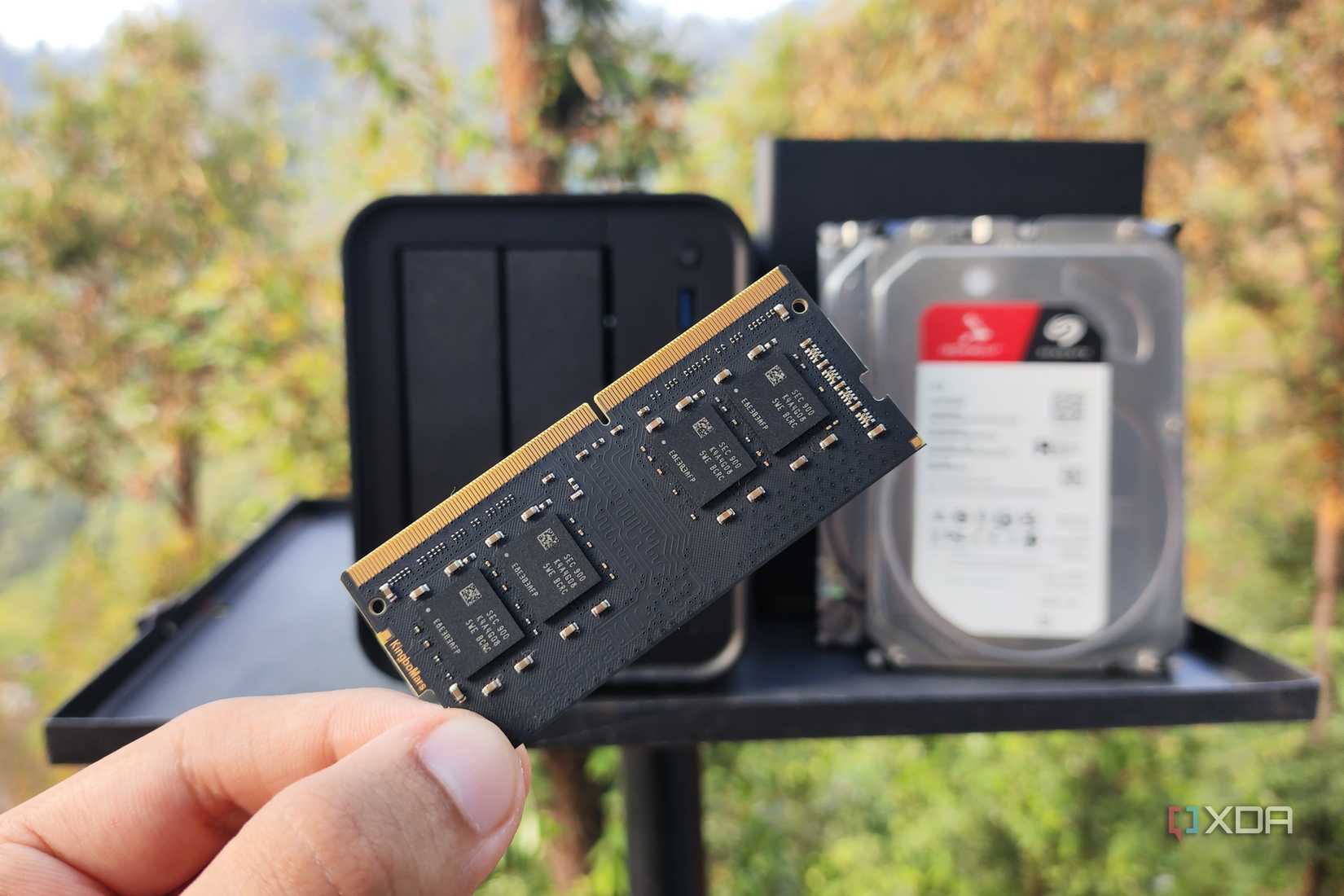
One of the reasons why MEXT’s predictive approach makes sense in its data center use case is, unfortunately, the same reason it’s highly unlikely to translate cleanly to a standard consumer PC. Tasks such as AI inference, analytics and virtualization tend to follow a loop of structured and repetitive memory access patterns, which is the reason why the engine is able to leverage this behavior through predictive analytics. This means that the same datasets are accessed in the same sequence and at broadly predictable levels, and that regularity gives the engine to train upon. When it has enough historical data, it can anticipate which pages will be needed next and move them from flash to DRAM before they are requested. By taking a predictive instead of a reactive approach, the system is able to hide much of the latency associated with flash storage and maintain the illusion of a significantly larger memory pool.
Consumer workloads, on the other hand, are far less predictable. Gaming, web browsing, running a suite of creative software and everyday multitasking generate requests that are varied and often susceptible to latency spikes. Consumer desktops have seen something similar on the Windows platform through the pagefile, which uses demand paging to offload memory pages to storage when RAM is exhausted.
AMD’s acquisition of MEXT is the latest entry in a pattern that has defined the hardware cycle in this decade. The industry is continuously reaching for software and algorithmic solutions to problems that silicon can no longer solve economically. Another example that comes to mind is Nvidia’s Neural Texture Compression demonstrated at GTC 2026, which was Team Green’s answer to low-VRAM configuration GPUs. DLSS, FSR, and frame generation have also followed the same logic in the last three years so far. Rather than shipping faster chips, the industry titans have built algorithms that make existing chips appear faster and expensive memory go further. MEXT seems to operate on the same philosophy in the data center, using AI-driven prefetching to make cheaper NAND flash approximate the behavior of DRAM.
One does wonder, however, if memory tiering eventually succeeds in driving down enterprise DRAM demand sustainably, does the pressure shift to NAND flash next? After all, NAND and SSD prices have fortunately remained comparatively stable through the DRAM crisis, but sustained enterprise tiering demand at scale may introduce a new variable that’s worth watching.
This is shaping up to be a decade that may be remembered as the one where the industry discovered that software and algorithmic tricks can often stretch hardware further than anyone expected. The question that’s worth asking though, is if the industry will create the next component shortage in the process, and if solving one bottleneck simply creates another in its place. In the hardware shortage cycle, every component based on silicon has its turn, and it’s worth watching what comes next.